What Should You Consider Before Ordering Custom Tin Boxes?
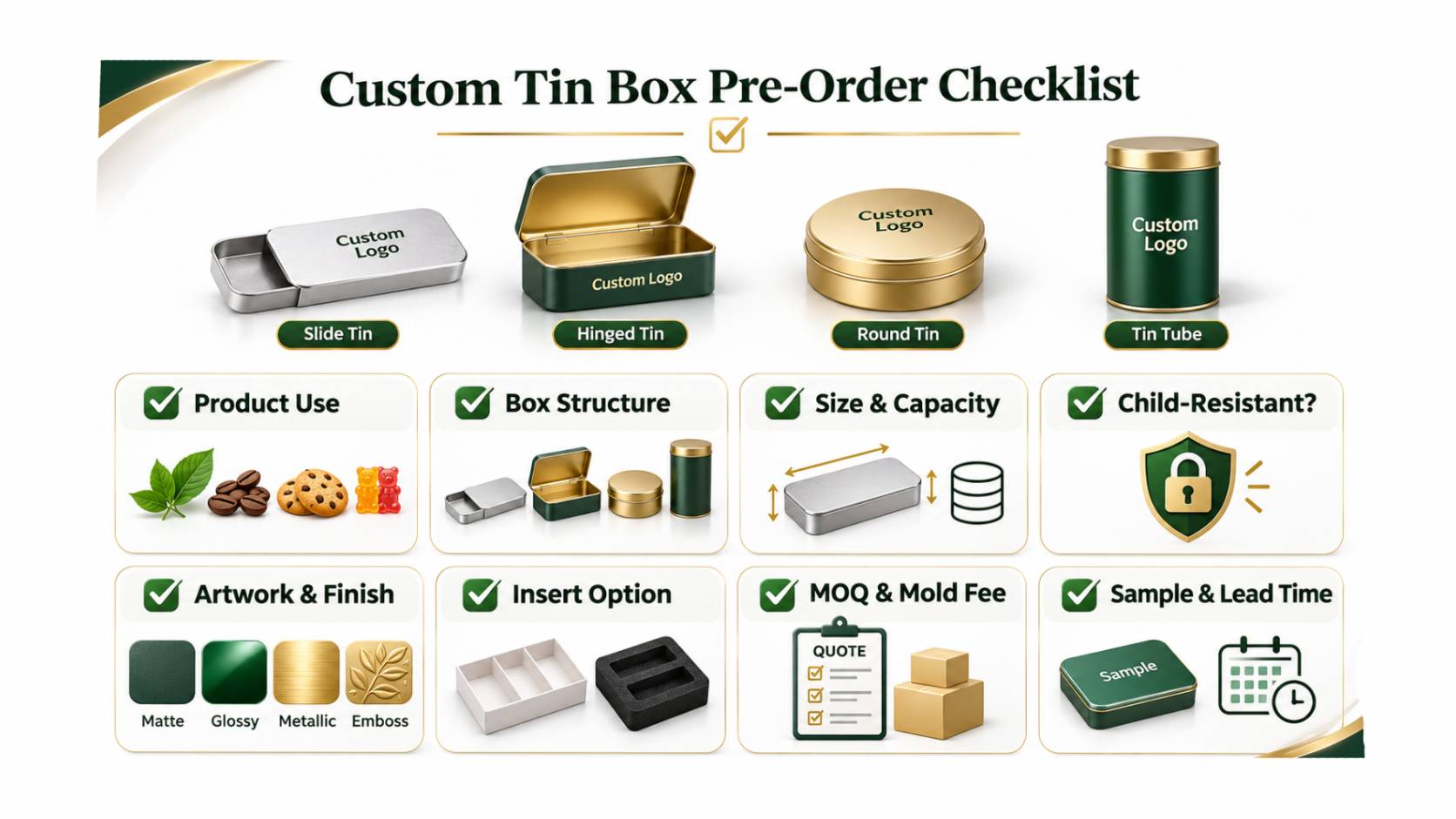
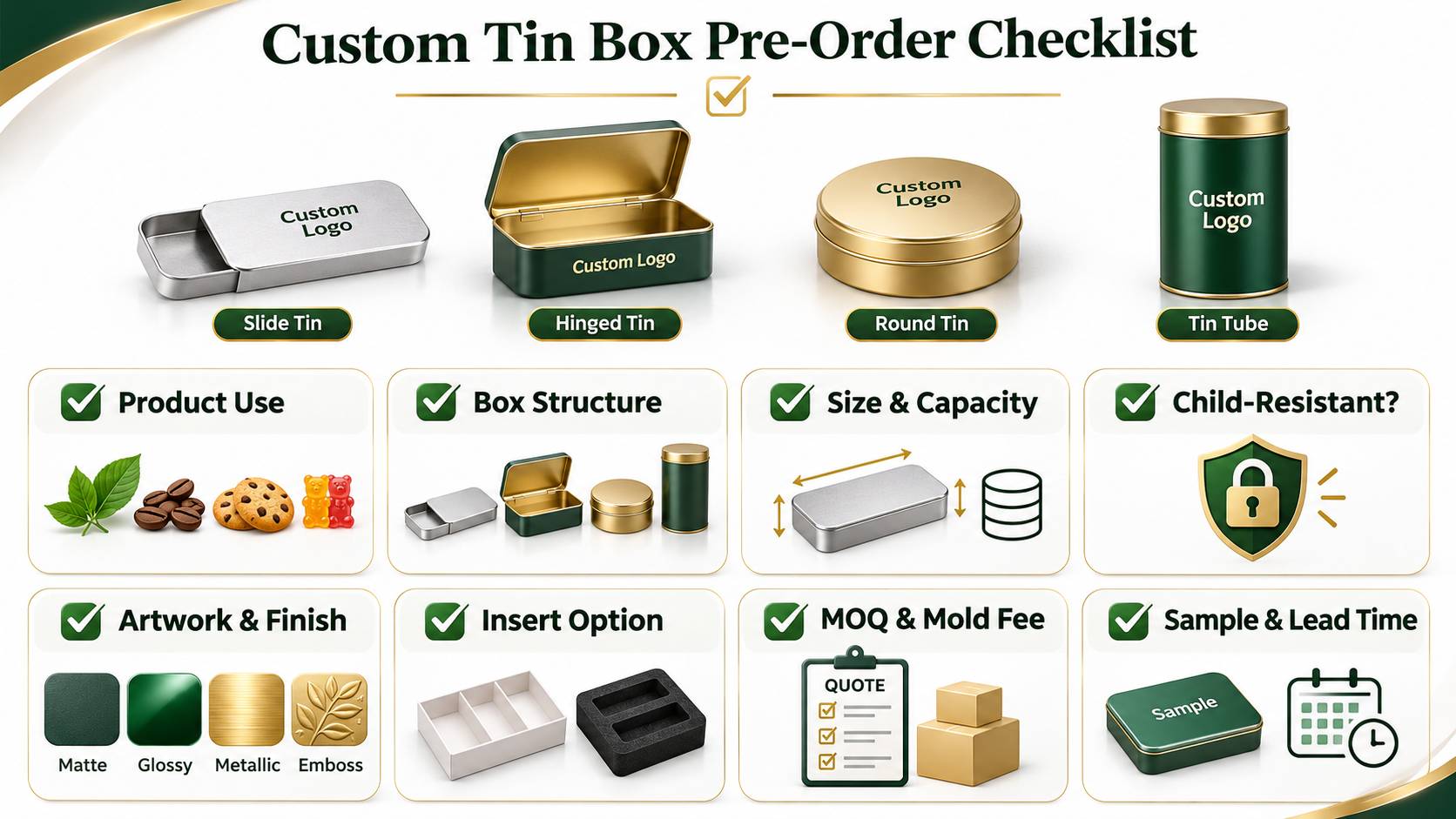
Before ordering custom tin boxes, buyers should confirm seven key details: product requirements, box structure and dimensions, tinplate materials, printing specifications, minimum order quantity (MOQ), sampling, and delivery arrangements. Preparing these details helps manufacturers provide more accurate quotations and reduces misunderstandings during production.
For cannabis brands, dispensaries, and wholesale buyers, this guide explains what to check before placing a custom tin packaging order.
1. Confirm Your Product and Packaging Requirements
Start by identifying what your custom tin boxes will contain.
Common applications include pre-rolls, edibles, concentrates, and branded accessories.
Important details include:
-
Product dimensions and quantity per box
-
Whether products contact the tin directly
-
Required protection during storage and transportation
-
Retail presentation and branding requirements
These factors influence the box size, interior design, and material selection.
For products requiring direct food contact, buyers should confirm appropriate materials and supporting documentation.
2. Choose the Right Tin Box Structure and Size
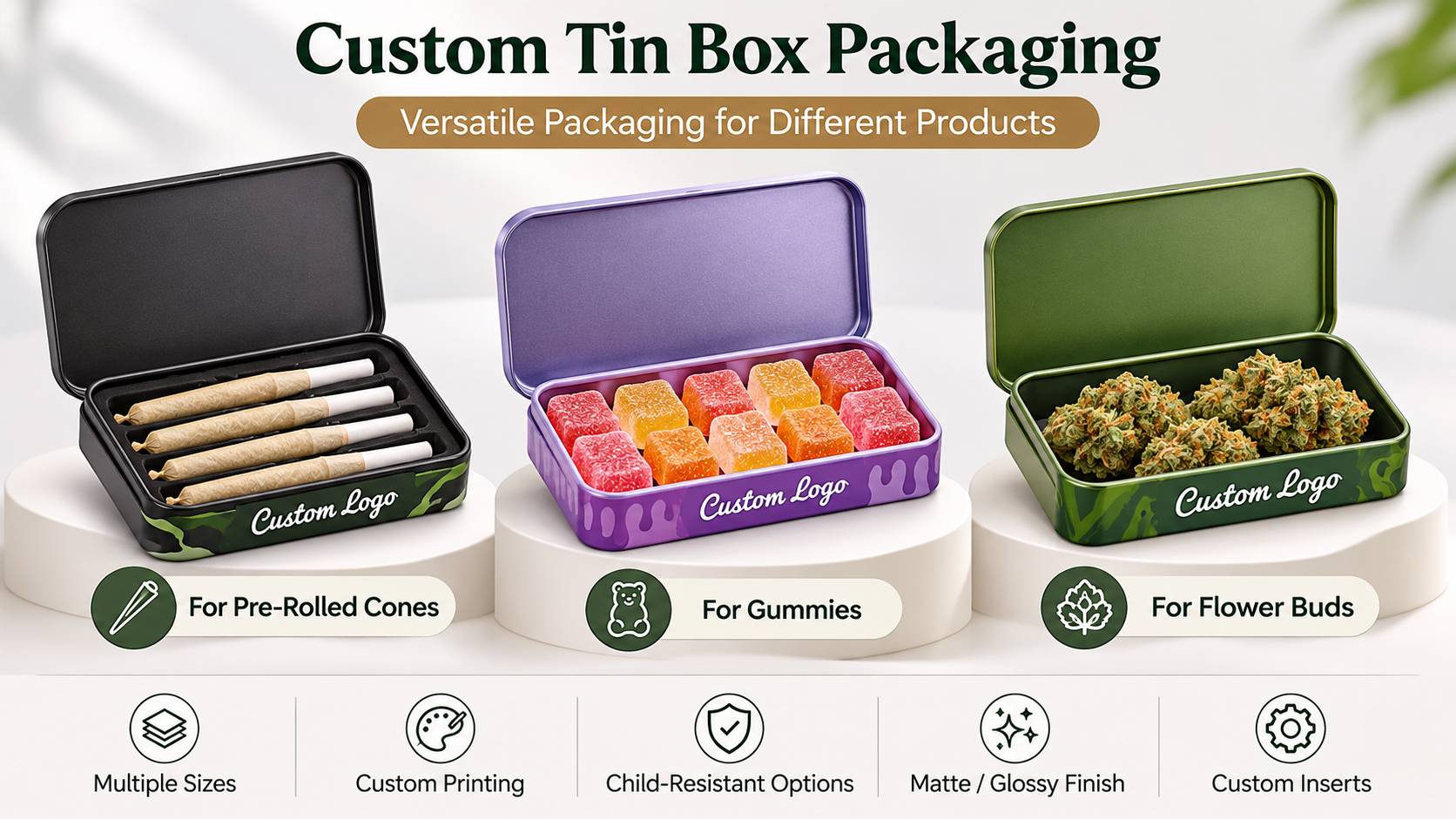
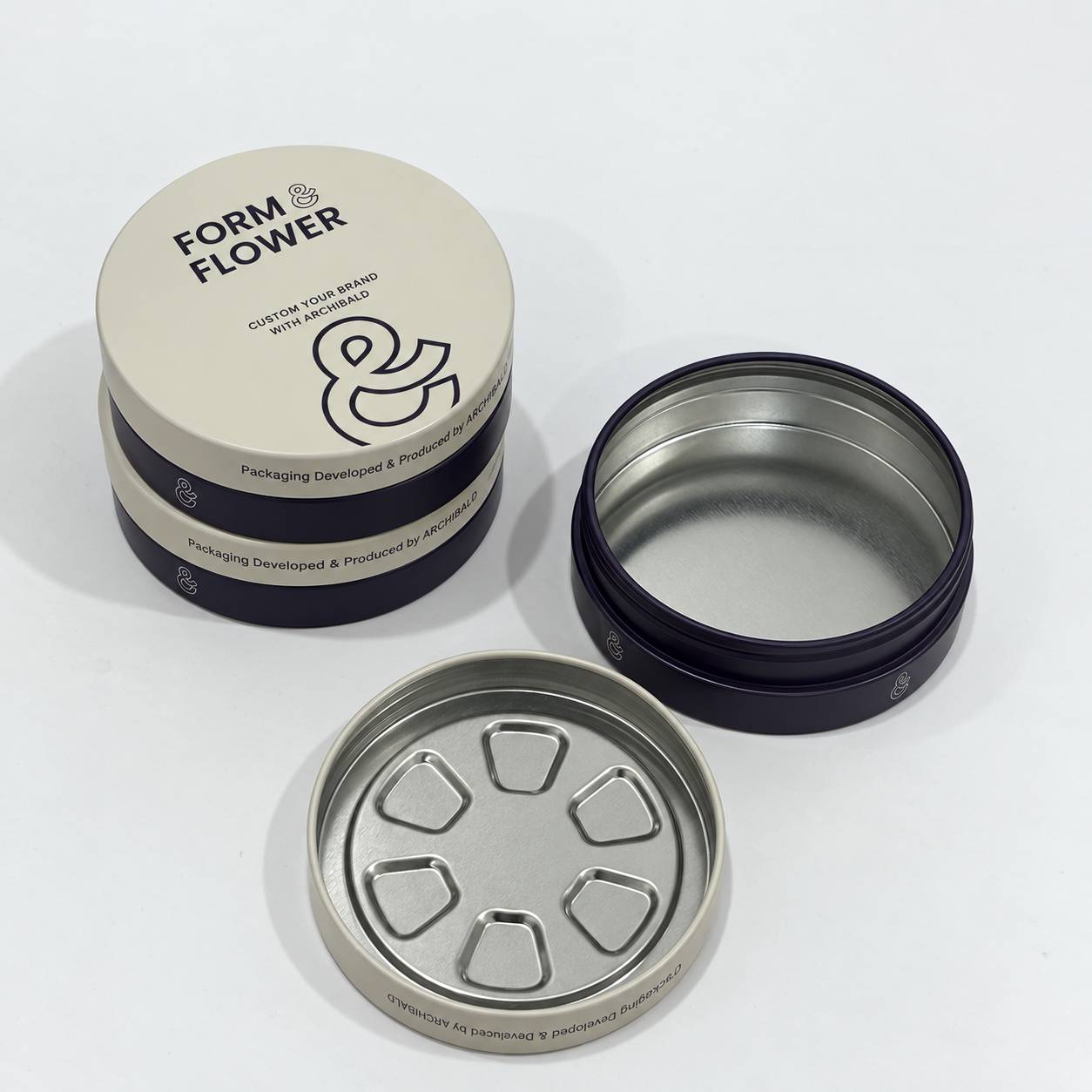
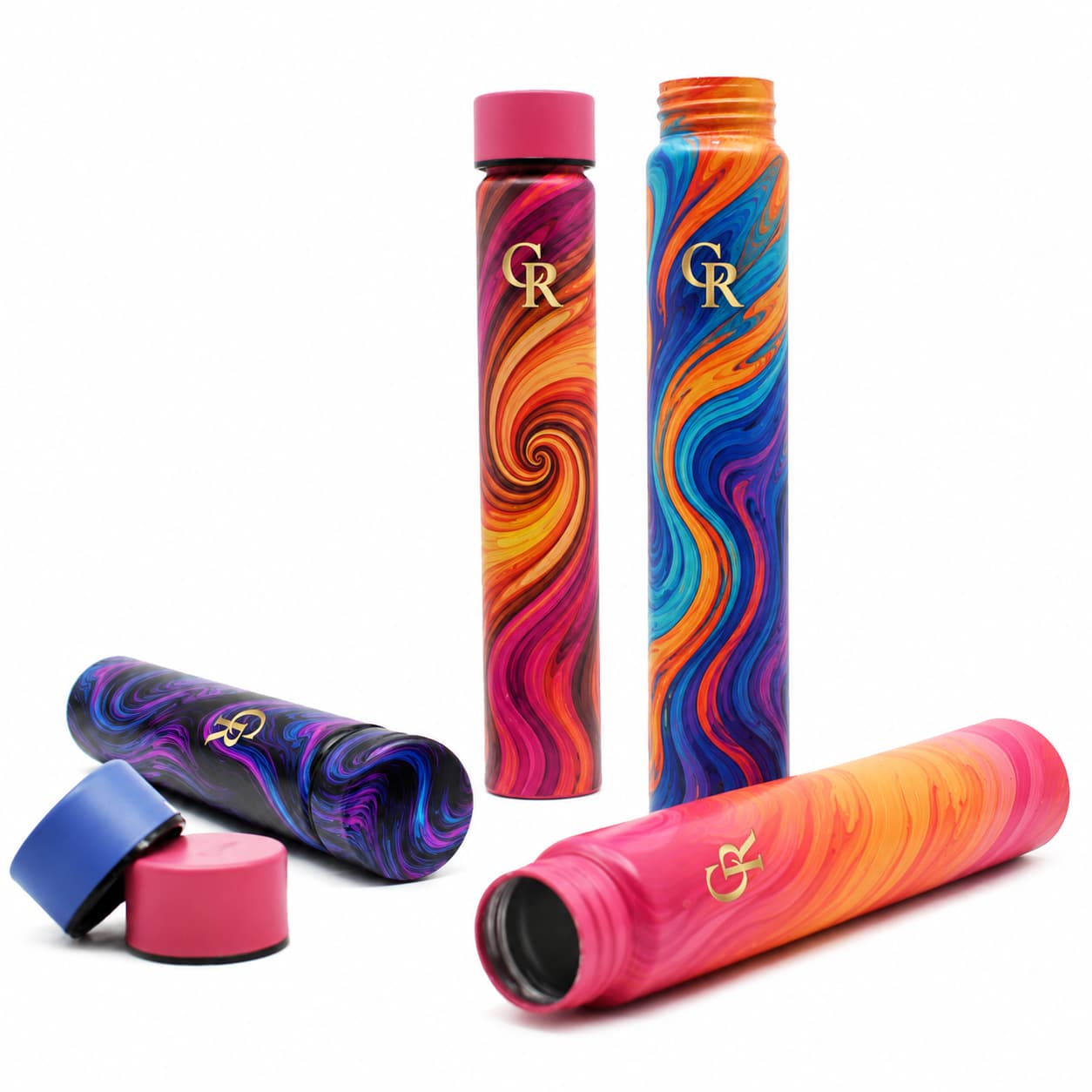
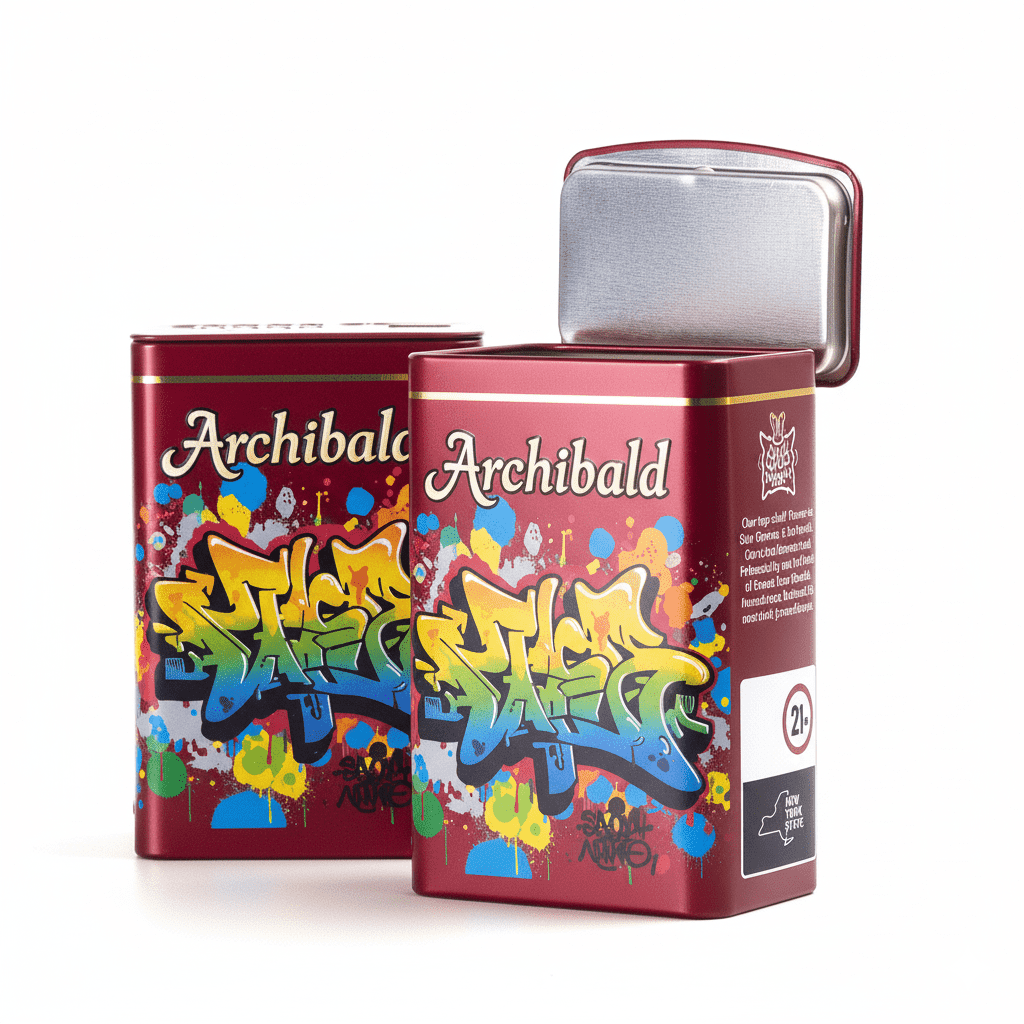
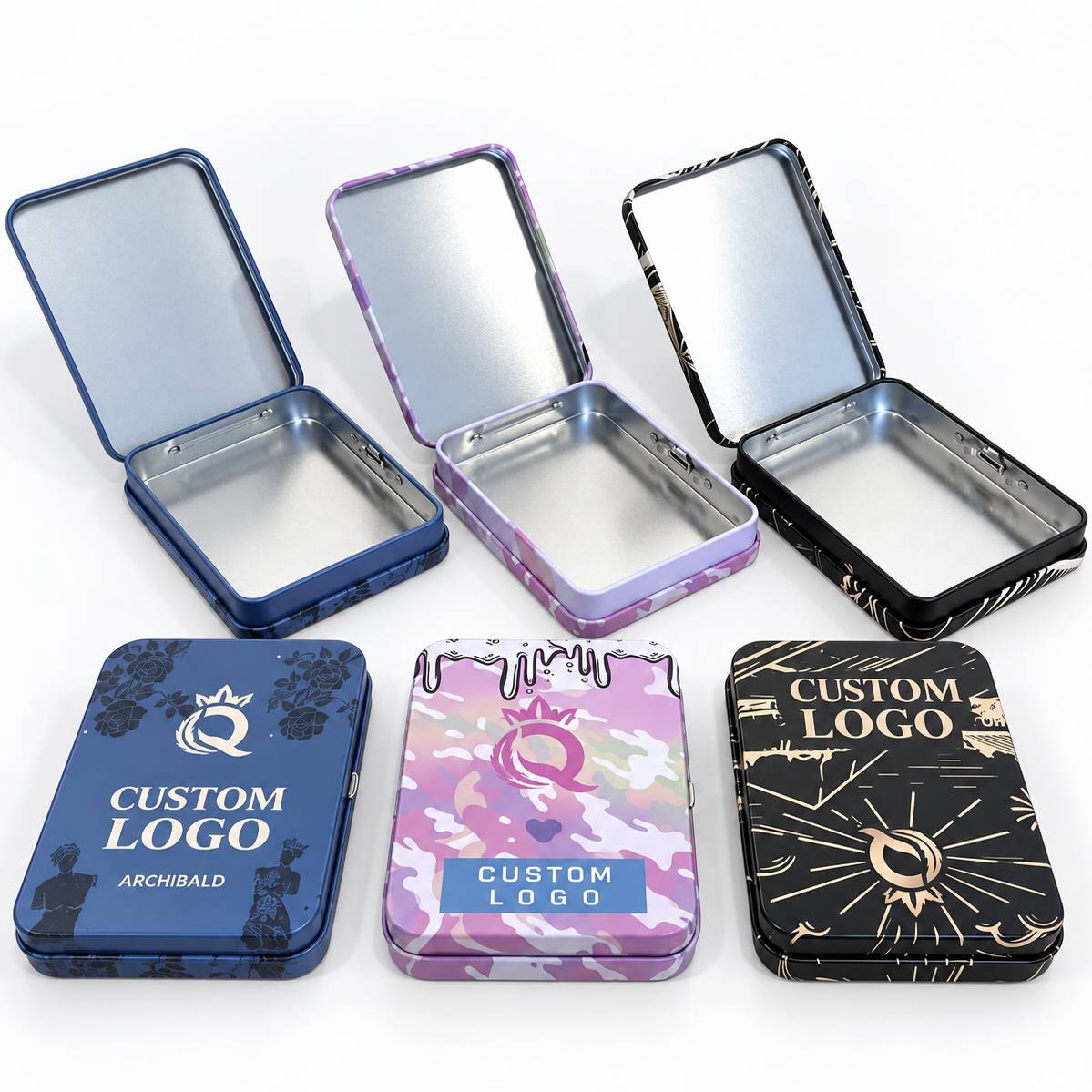
Custom tin boxes are available in several structures, each offering different opening methods and applications.
Popular options include:
-
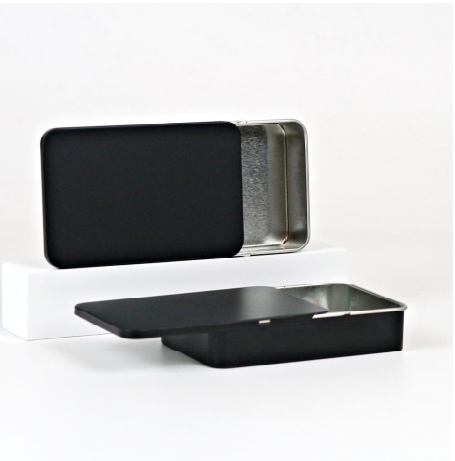
Slide Tin Boxes: Compact packaging with sliding lids.
-
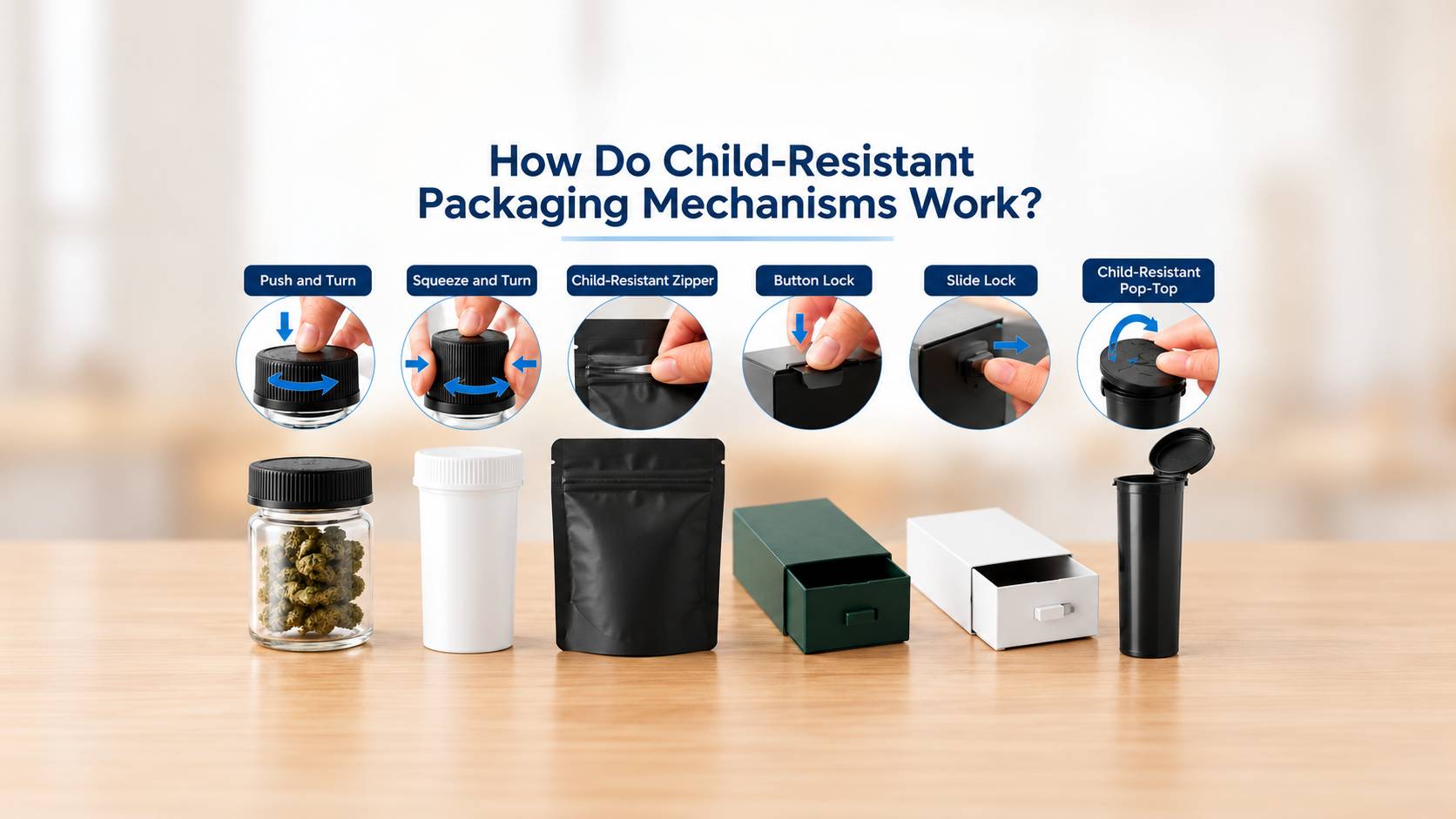
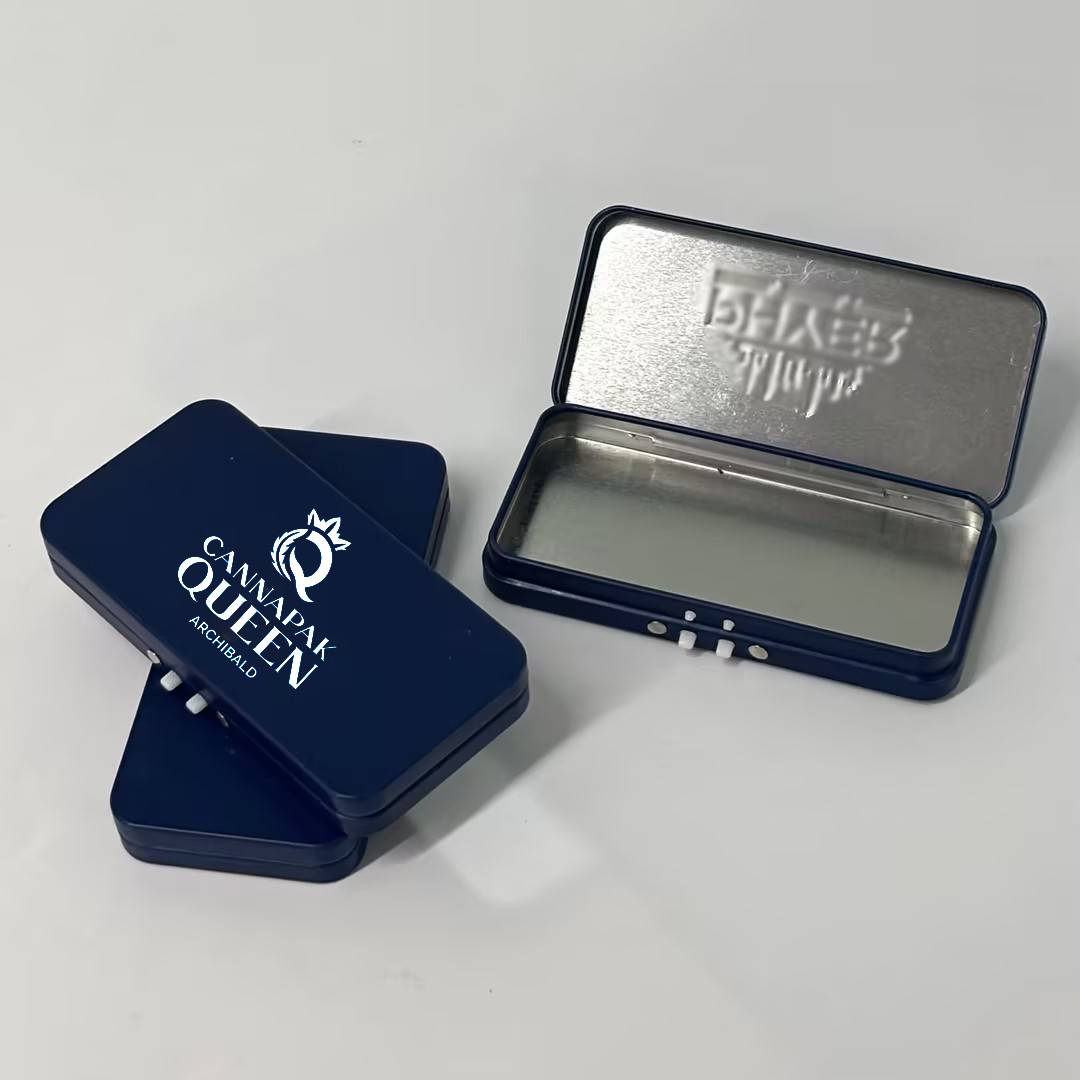
Child-Resistant Tin Boxes: Selected locking structures designed to require more deliberate opening actions.
-
Round Tin Boxes: Cylindrical containers with different lid options.
-
Tin Tubes: Elongated containers suitable for specific product dimensions.
-
Hinged Tin Boxes: Attached flip-top lids for convenient repeated opening.
Buyers should provide both product dimensions and preferred packaging dimensions when available.
Internal dimensions are particularly important when the box includes protective inserts.
Child-resistant performance must be verified through applicable testing rather than assumed from the closure design.
3. Check Tinplate Materials and Interior Coatings
Tinplate thickness, surface treatment, and interior coatings can influence the durability, appearance, and suitability of custom tin boxes.
Before ordering, confirm:
-
Tinplate material and available thickness
-
Interior coating or lining requirements
-
Compatibility with the intended contents
For edible products, material suitability depends on the intended contact conditions and relevant documentation.
A suitable material specification should be established before finalizing production.
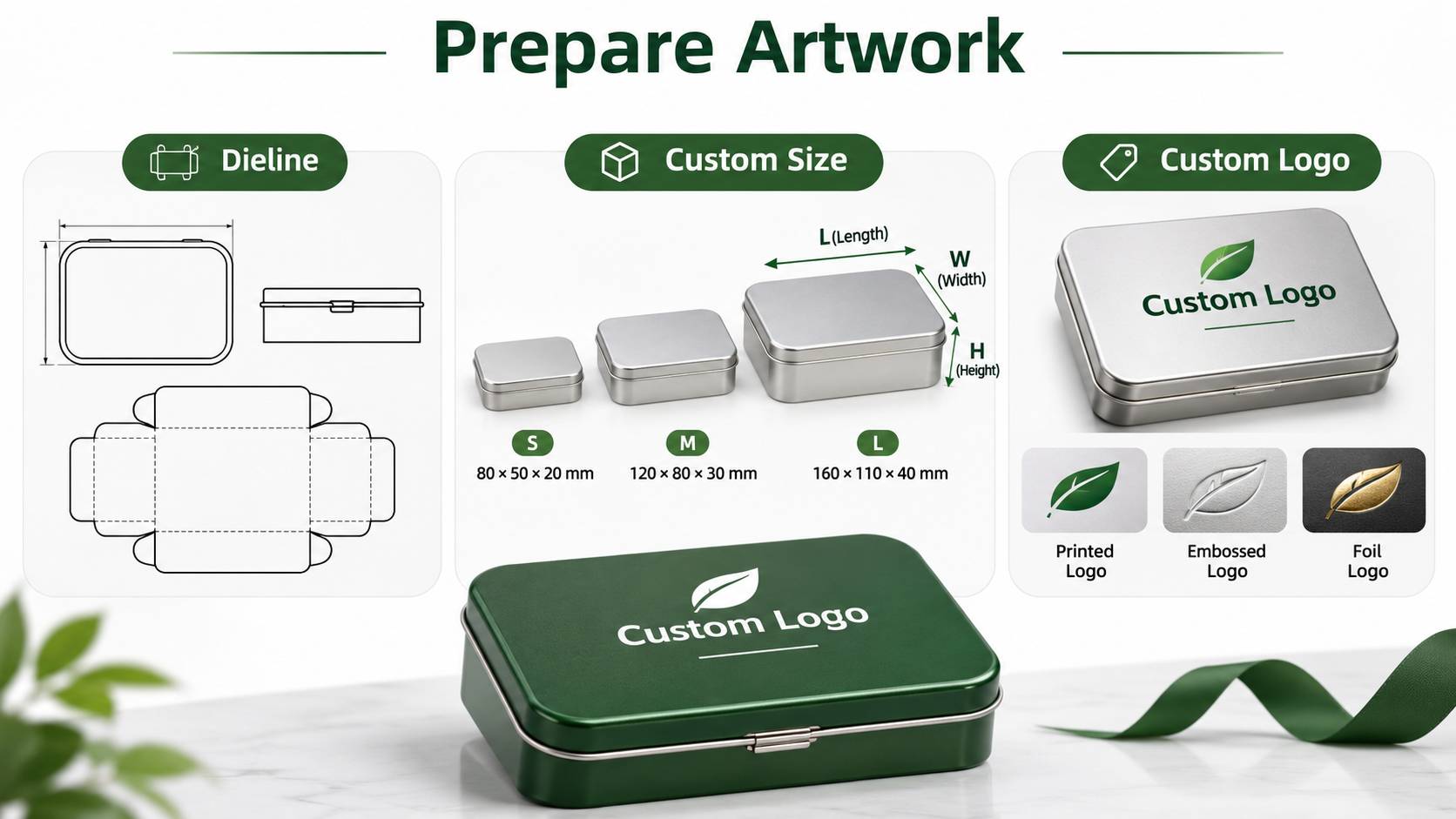
4. Prepare Artwork and Printing Specifications
Custom printing helps brands create distinctive retail packaging.
Common options include full-color printing, matte or glossy finishes, hot stamping, embossing, debossing, and selected specialty coatings.
Before requesting a quotation, prepare your logo files, artwork, preferred colors, and finishing requirements.
Special decorative effects may require additional production processes or tooling.
Buyers can review printing samples to confirm colors, surface appearance, and logo placement before bulk production.
5. Understand MOQ, Mold Costs, and Pricing
The minimum order quantity for custom tin boxes varies depending on the packaging structure.
Archibald's reference MOQs include:
| Tin Box Type | MOQ |
|---|---|
| Slide Tin Boxes | 10,000 pcs |
| Child-Resistant Tin Boxes | 5,000 pcs |
| Round Tin Boxes | 5,000 pcs |
| Tin Tubes | 5,000 pcs |
These quantities serve as purchasing references. Final requirements should be confirmed for the selected specifications.
Mold Costs: Tooling or mold fees depend on the actual product design, dimensions, and structural requirements. Archibald evaluates these costs according to each project.
When comparing quotations, buyers should consider the selected structure, materials, printing finishes, tooling requirements, and order quantity.
6. Request Samples Before Bulk Production
Sampling is an important step when ordering custom tin boxes.
A sample allows buyers to evaluate:
-
Box dimensions and product fit
-
Lid alignment and opening functionality
-
Printing colors and decorative finishes
-
Material appearance and workmanship
-
Insert dimensions and product positioning
For child-resistant designs, samples also help buyers review the opening mechanism. Any required child-resistant compliance should be verified through appropriate testing documentation.
Confirming samples before production can reduce the risk of specification errors.
7. Confirm Production and Delivery Details
Production schedules should be discussed before confirming a custom tin packaging order.
At Archibald, the reference production lead time is 30–40 days after sample approval.
This period does not include the time needed for initial design discussions, sample development, or shipping unless otherwise agreed.
Buyers should also confirm the delivery destination, packaging method, transportation arrangements, and any special handling requirements.
FAQ
Q1. Do custom tin boxes require mold fees?
A : Mold costs depend on the product structure, dimensions, and tooling requirements. Fees are discussed according to the actual project.
Q2. How long does custom tin box production take?
A : Archibald's reference production lead time is 30–40 days after sample approval, subject to project confirmation.
Q3. Can I request samples before bulk production?
A : Yes. Archibald supports sample development to help buyers evaluate packaging dimensions, opening functionality, printing, and overall appearance.
Conclusion
Ordering custom tin boxes requires careful consideration of materials, dimensions, closures, printing, costs, and production requirements.
By preparing a clear specification and reviewing samples before production, buyers can communicate their needs more effectively.
Archibald supports custom tin packaging projects with different structures, branding options, and manufacturing coordination.
Contact Archibald to discuss your packaging requirements and request a quotation.
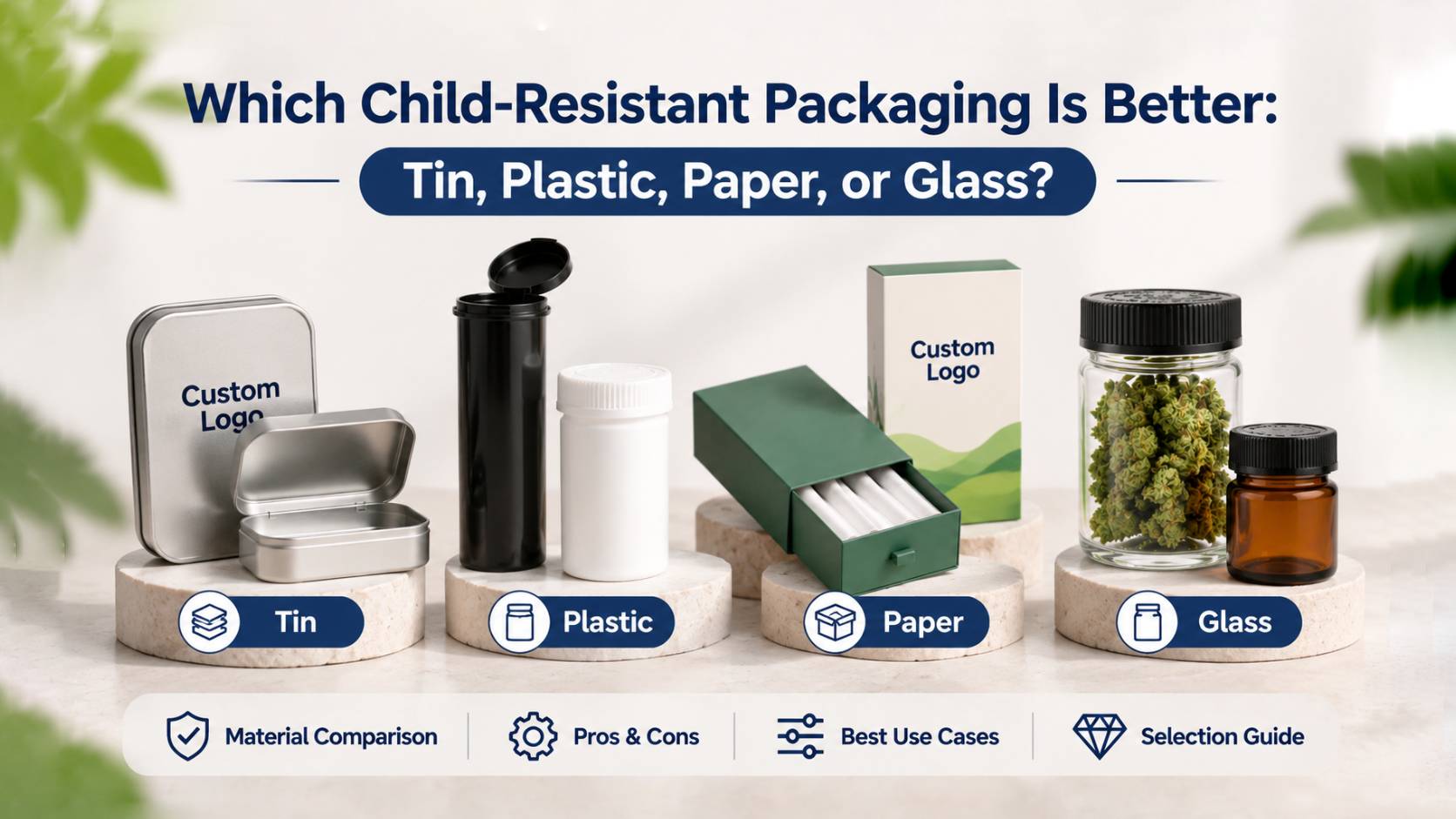
Which Child-Resistant Packaging Is Better: Tin, Plastic, Paper, or Glass?