Which Child-Resistant Packaging Is Better: Tin, Plastic, Paper, or Glass?
There is no single best material for child-resistant packaging. Tin, plastic, paper, and glass can all be used to develop child-resistant packaging, but each offers different advantages in durability, weight, customization, and product protection. The right choice depends on your product type, brand positioning, budget, and applicable safety requirements.
For cannabis brands and dispensaries, understanding these differences helps when selecting packaging for flower, pre-rolls, edibles, and concentrates.
1. What Makes Packaging Child-Resistant?
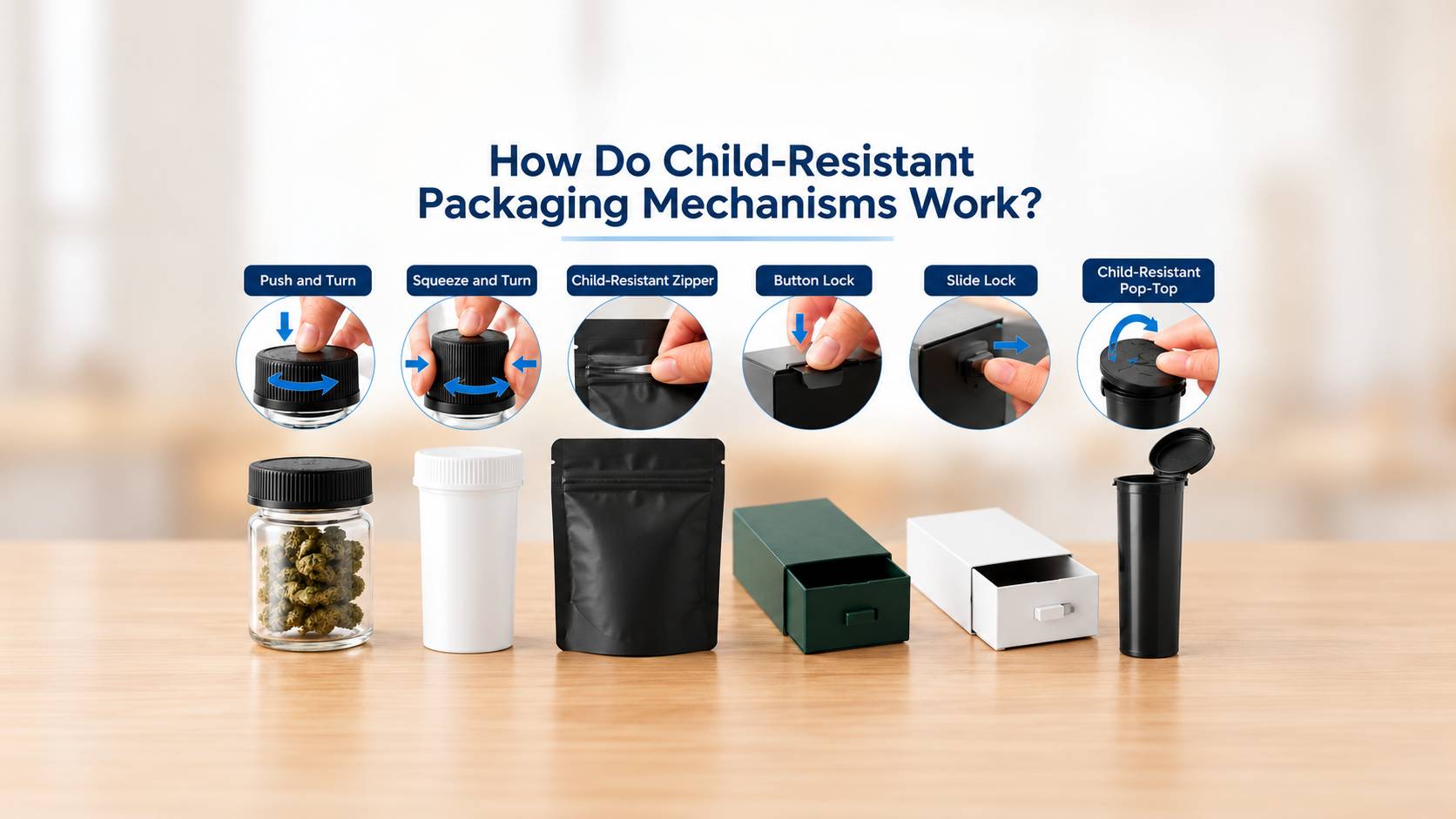
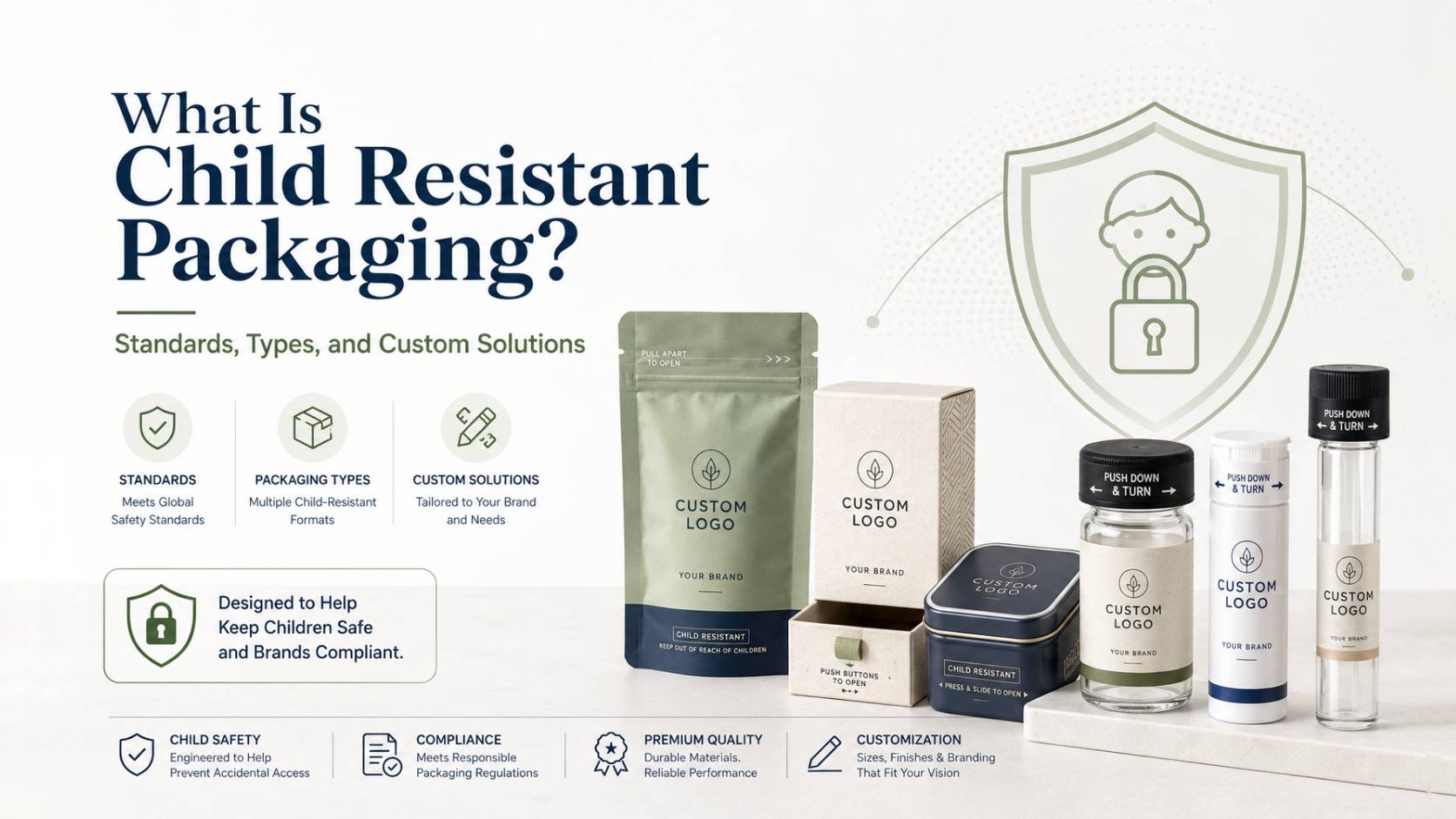
Child-resistant packaging uses specialized opening mechanisms designed to make access difficult for young children while remaining usable for adults.
Unlike ordinary packaging, these designs may require specific combinations of pressure, movement, or coordinated actions.
Common mechanisms include:
-
Push-and-turn caps
-
Squeeze-and-turn closures
-
Child-resistant zippers
-
Button-lock structures
-
Specialized slide-lock mechanisms
Importantly, child-resistant performance does not come from the packaging material alone. A metal tin, plastic container, paper box, or glass jar must incorporate an appropriate structure and satisfy applicable testing requirements before being described as child-resistant.
2. Tin vs. Plastic vs. Paper vs. Glass: Which Is Better?
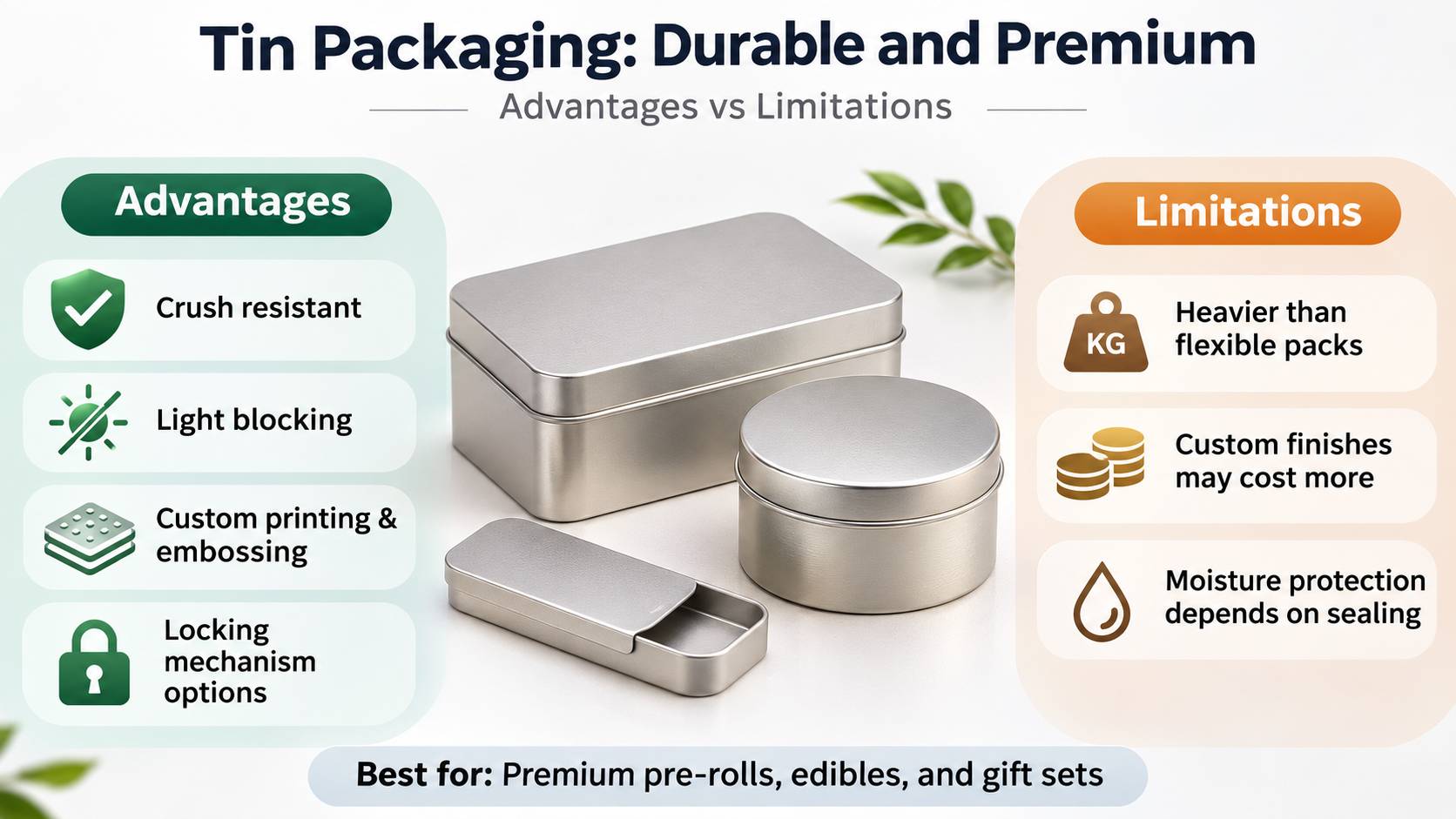
Tin Packaging: Durable and Premium
Tin packaging is a popular choice for brands seeking rigid protection and distinctive retail presentation.
Advantages:
-
Strong metal construction helps resist crushing.
-
Opaque surfaces block direct light.
-
Custom printing, embossing, and decorative finishes are available.
-
Selected designs can incorporate specialized locking mechanisms.
Limitations:
-
Generally heavier than flexible packaging.
-
Custom structures and finishes may increase production costs.
-
Moisture protection depends on the lid and sealing components.
Best for: Premium pre-roll collections, edible packaging, and branded retail gift sets.
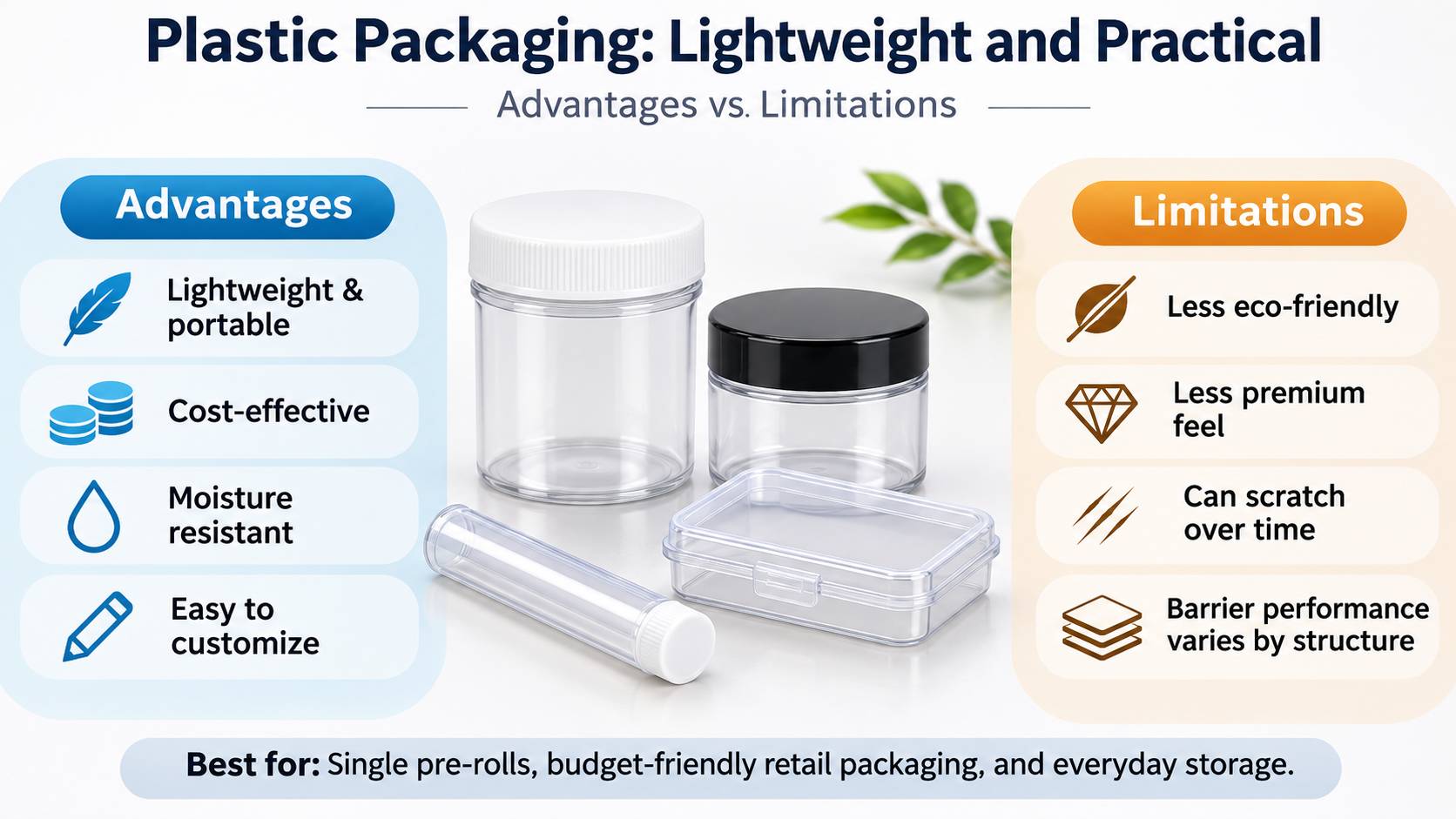
Plastic Packaging: Lightweight and Versatile
Plastic is widely used for child-resistant jars, tubes, and other compact packaging formats.
Advantages:
-
Lightweight and convenient for transportation.
-
Available in different shapes, sizes, and colors.
-
Supports pop-top, screw-cap, and selected child-resistant closures.
-
Offers flexible logo printing and labeling options.
Limitations:
-
Barrier performance varies by plastic material and closure design.
-
Durability depends on resin selection and wall thickness.
-
Recycling options depend on material composition and local facilities.
Best for: Single pre-rolls, flower jars, and everyday dispensary packaging.

Paper Packaging: Flexible and Brand-Friendly
Paperboard packaging offers extensive structural and printing customization, making it attractive for brands focused on retail presentation.
Advantages:
-
Lightweight and suitable for different box structures.
-
Supports custom artwork, foil stamping, UV, and embossing effects.
-
Can incorporate button-lock and specialized drawer mechanisms.
-
Suitable for single-product and multipack packaging.
Limitations:
-
Moisture resistance may require additional coatings or inner packaging.
-
Crush resistance depends on paperboard thickness and construction.
-
Child-resistant functionality requires a specifically designed locking structure.
Best for: Pre-roll boxes, premium retail packaging, and customized edible packaging.
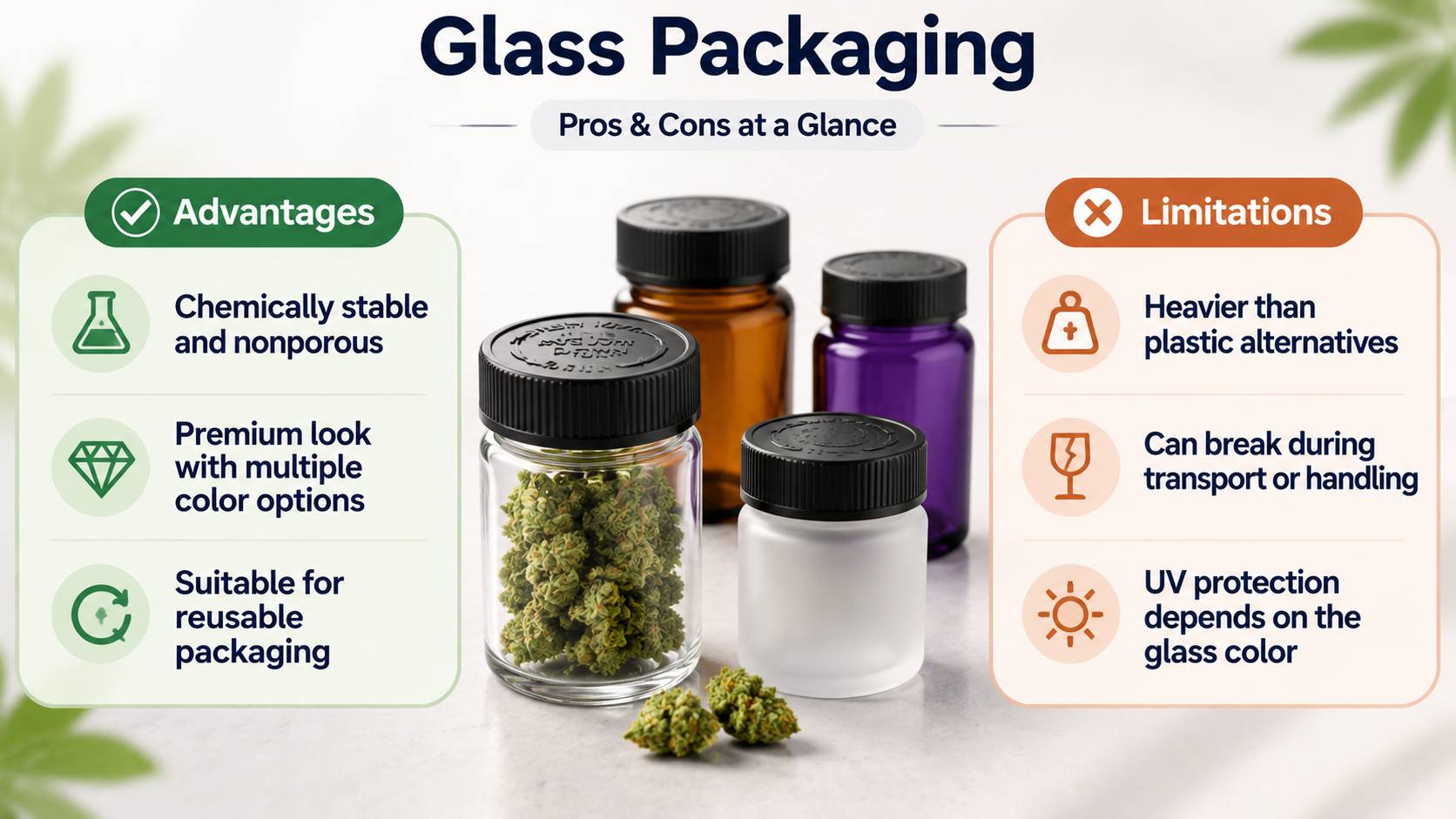
Glass Packaging: Stable and Premium
Glass jars combine rigid construction with a premium appearance and are commonly used for flower and concentrate packaging.
Advantages:
-
Generally chemically stable and nonporous.
-
Available in clear, amber, violet, and opaque finishes.
-
Compatible with selected push-and-turn closures.
-
Suitable for reusable packaging designs.
Limitations:
-
Heavier than most plastic alternatives.
-
Can break during transportation or handling.
-
UV protection depends on the glass color and specifications.
-
Sealing performance depends on the lid and liner.
Best for: Premium flower jars, concentrates, and selected edible products.
3. Child-Resistant Packaging Material Comparison
| Feature | Tin | Plastic | Paper | Glass |
|---|---|---|---|---|
| Physical protection | High | Varies | Varies | Rigid but breakable |
| Weight | Moderate | Lightweight | Lightweight | Heavy |
| Branding flexibility | High | High | Very high | High |
| Moisture protection | Depends on closure | Depends on material | May need additional barrier | Depends on closure |
| Custom structures | Available | Available | Available | Mainly closure-based |
| Typical applications | Boxes and tins | Jars and tubes | Retail boxes | Jars and containers |
No material is automatically more child-resistant than another. The complete packaging design and its testing results determine whether it meets the required performance criteria.
4. Which Child-Resistant Packaging Is Best for Your Brand?
The best choice depends on your product and business priorities.
-
For Pre-Rolls: Plastic tubes offer convenient individual packaging, while paper boxes and tin cases work well for multipacks.
-
For Cannabis Flower: Glass jars provide rigid protection and premium presentation, while selected plastic jars offer lighter alternatives.
-
For Edibles: Mylar bags, plastic containers, and tin boxes can be considered depending on product form, material compatibility, and closure requirements.
-
For Premium Brands: Glass and tin packaging offer distinctive presentation and decorative possibilities.
-
For Cost-Conscious Projects: Plastic and paper options may offer practical alternatives depending on specifications and order quantities.
Before selecting a structure, buyers should evaluate product dimensions, closure functionality, material requirements, and applicable child-resistant testing.
5. Custom Child-Resistant Packaging Solutions from Archibald
Archibald provides customizable packaging options for cannabis brands, dispensaries, and wholesale buyers.
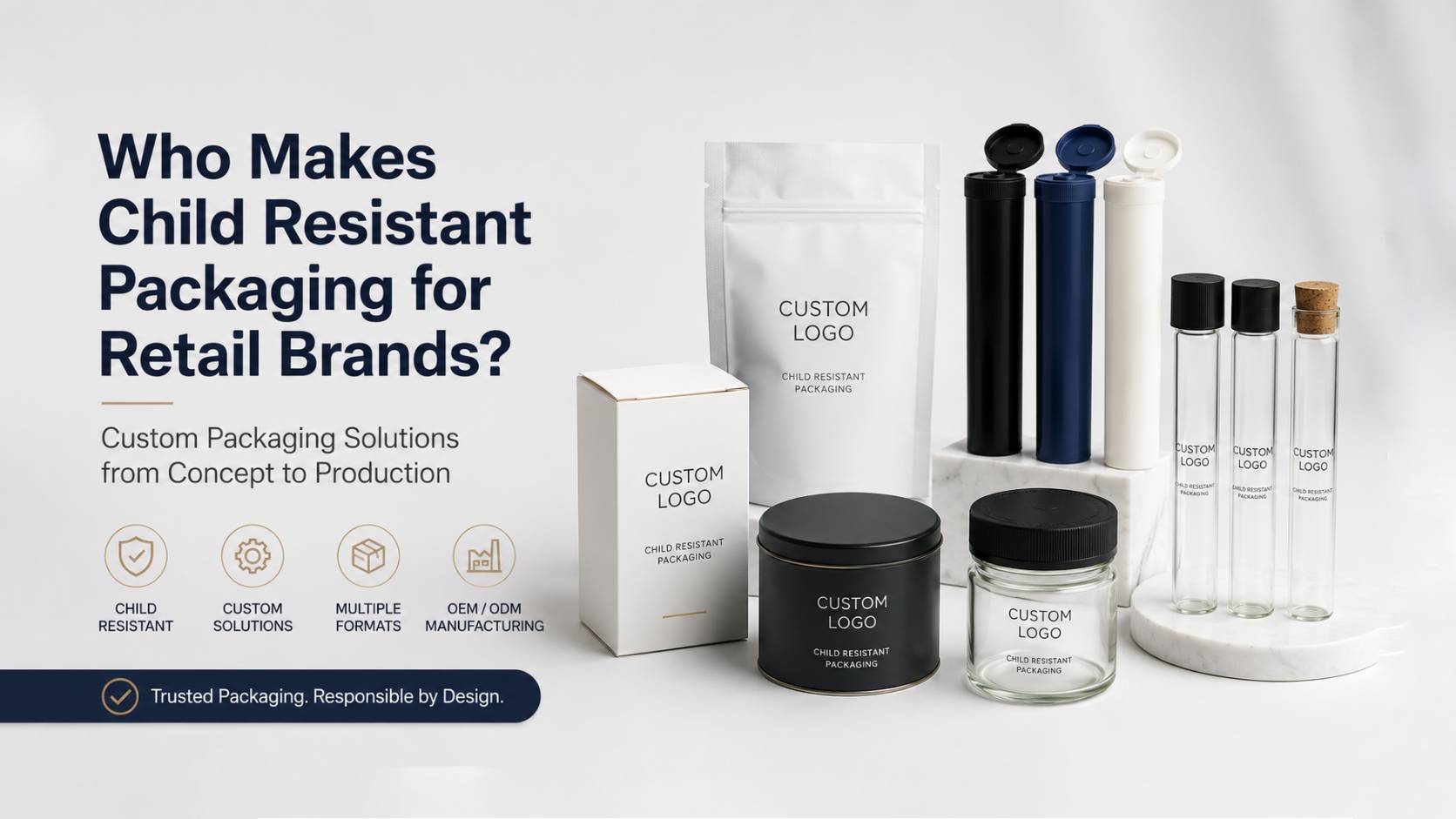
Our product range includes child-resistant Mylar bags, paper boxes, tin containers, glass jars, and plastic tubes.
Customization options include different sizes, colors, logo printing, decorative finishes, and selected locking structures.
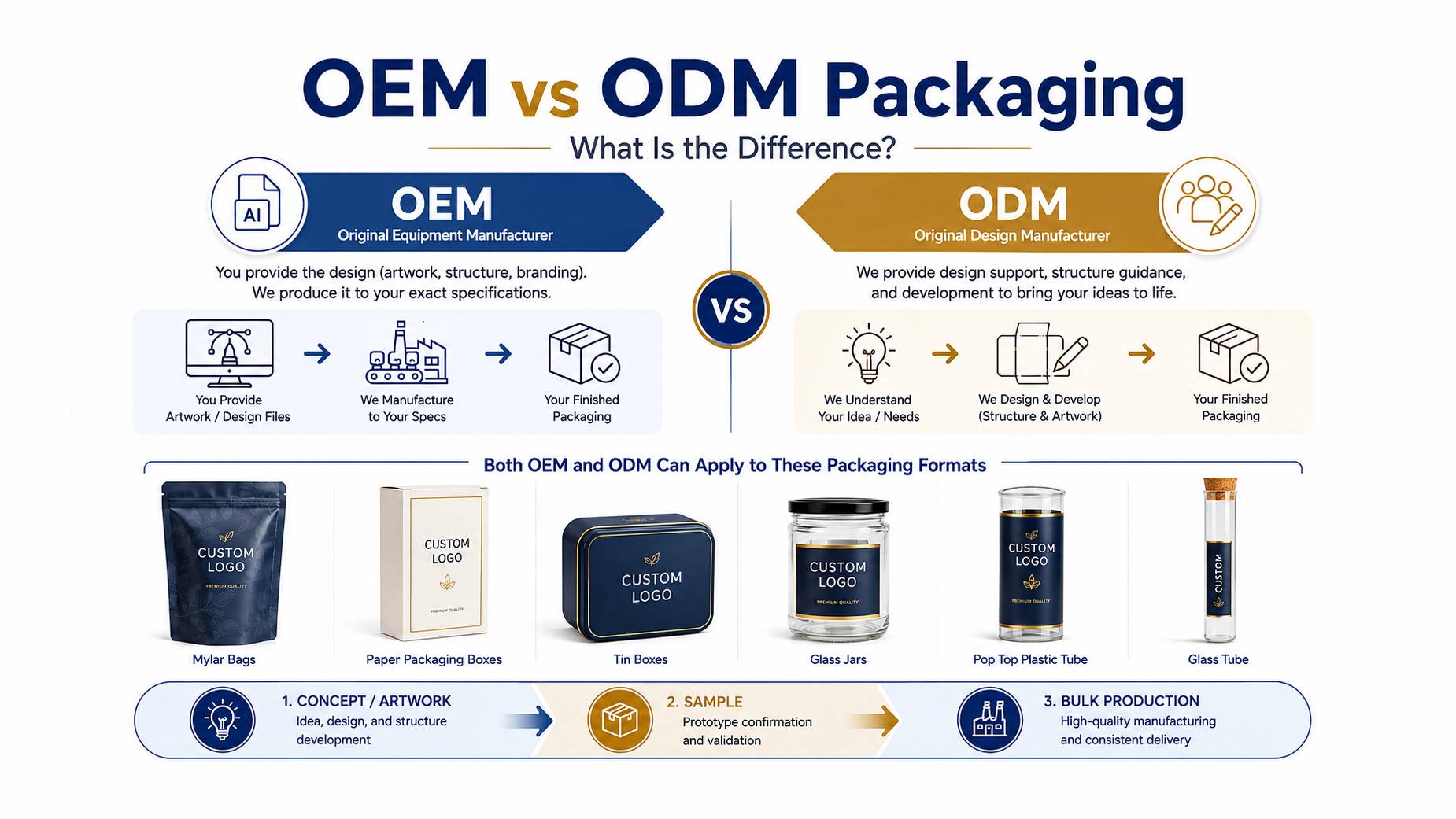
We also support packaging design discussions and sample development, helping buyers evaluate product fit, appearance, and closure functionality before bulk production.
Contact Archibald to discuss your custom packaging requirements and request samples or a quotation.
FAQ
Q1. Which material is best for child-resistant packaging?
A : There is no universally best material. Tin, plastic, paper, and glass can all support child-resistant designs when the complete packaging structure meets applicable testing requirements.
Q2. Is plastic packaging better than glass for cannabis products?
A : Plastic is generally lighter and more impact-resistant, while glass offers a premium appearance and good material stability. The best option depends on product and storage requirements.
Q3. Can paper boxes and tin boxes be child-resistant?
A : Yes. Special locking structures can be incorporated into selected paper and tin packaging designs. Their child-resistant performance must be verified through appropriate testing.
Q4. Can Archibald customize child-resistant packaging with a brand logo?
A : Yes. Archibald supports custom logo printing, colors, sizes, labels, and selected decorative finishes across different child-resistant packaging formats.