Mylar Bag Material Explained: PET, AL, PE and High Barrier Film Structure
Mylar bags are widely used in custom flexible packaging because they can provide strong barrier protection, custom printing, resealable closure options, and premium retail presentation. However, many brands only know “mylar bag” as a general packaging name, without understanding what the material structure actually means.
In most custom mylar bags, the packaging is not made from a single material. Instead, it usually uses a multi-layer film structure, such as PET / AL / PE, to achieve strength, printability, barrier protection, and heat sealing performance.
This guide explains what PET, AL, and PE mean in mylar bag material, how each layer works, and how to choose the right structure for your custom packaging project.
What Is a Mylar Bag Made Of?
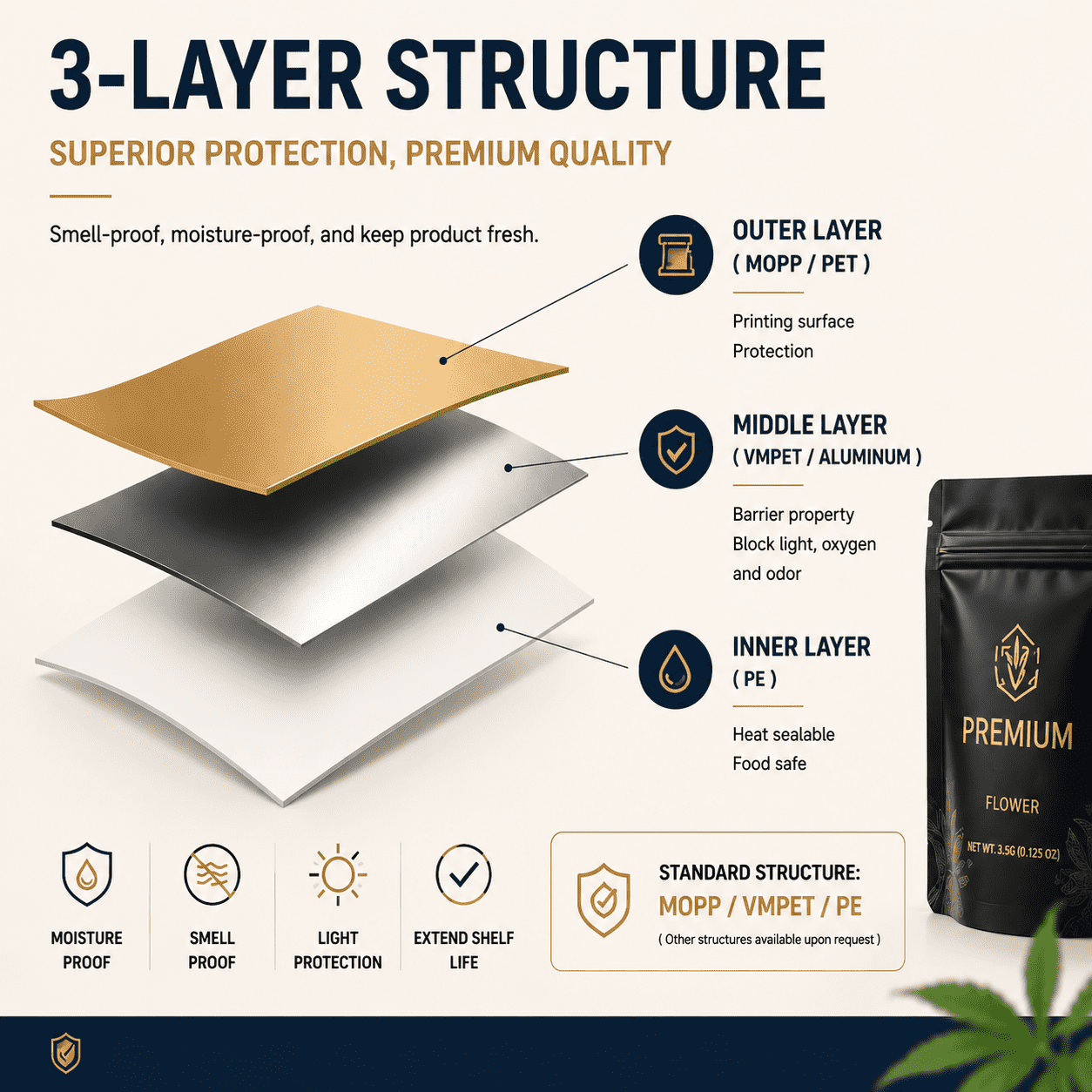
A mylar bag is usually made from laminated film, which means several material layers are combined together to create one flexible packaging structure.
A common structure is:
PET / AL / PE
Each layer has a different function:
- PET: outer layer for printing, strength, and durability
- AL: aluminum layer for barrier protection
- PE: inner layer for heat sealing and product contact
This multi-layer design helps mylar bags provide better protection than simple plastic bags. It can improve resistance against moisture, oxygen, light, odor, and external contamination.
For retail brands, choosing the right mylar bag material is important because it affects packaging appearance, shelf life, sealing performance, and customer experience.
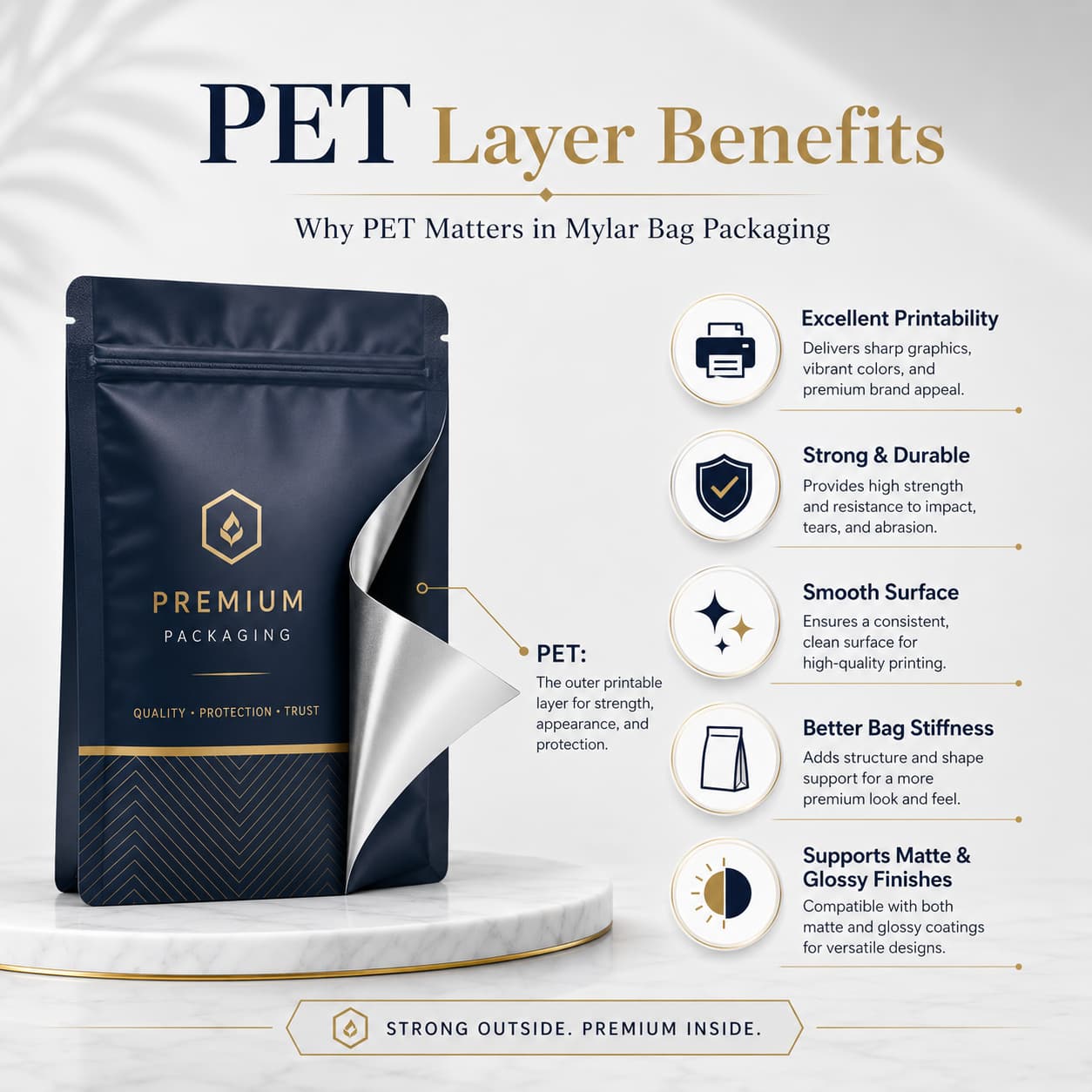
PET Layer: Printing, Strength and Durability
PET, also known as polyethylene terephthalate, is commonly used as the outer layer of mylar bags.
The PET layer plays an important role in packaging appearance and structure. It provides a smooth surface for printing and helps the bag maintain better strength during production, filling, shipping, and retail display.
Main functions of PET:
- Provides a printable outer surface
- Improves bag strength and stiffness
- Helps maintain packaging shape
- Supports matte or glossy surface finish
- Protects the printed artwork
- Improves durability during handling
For custom printed mylar bags, the PET layer is very important because it affects how sharp and stable the artwork looks.
If your packaging requires full-color printing, custom logo design, matte finish, glossy finish, spot UV, or holographic effect, the PET layer helps support the final visual result.
AL Layer: Light, Oxygen and Moisture Barrier
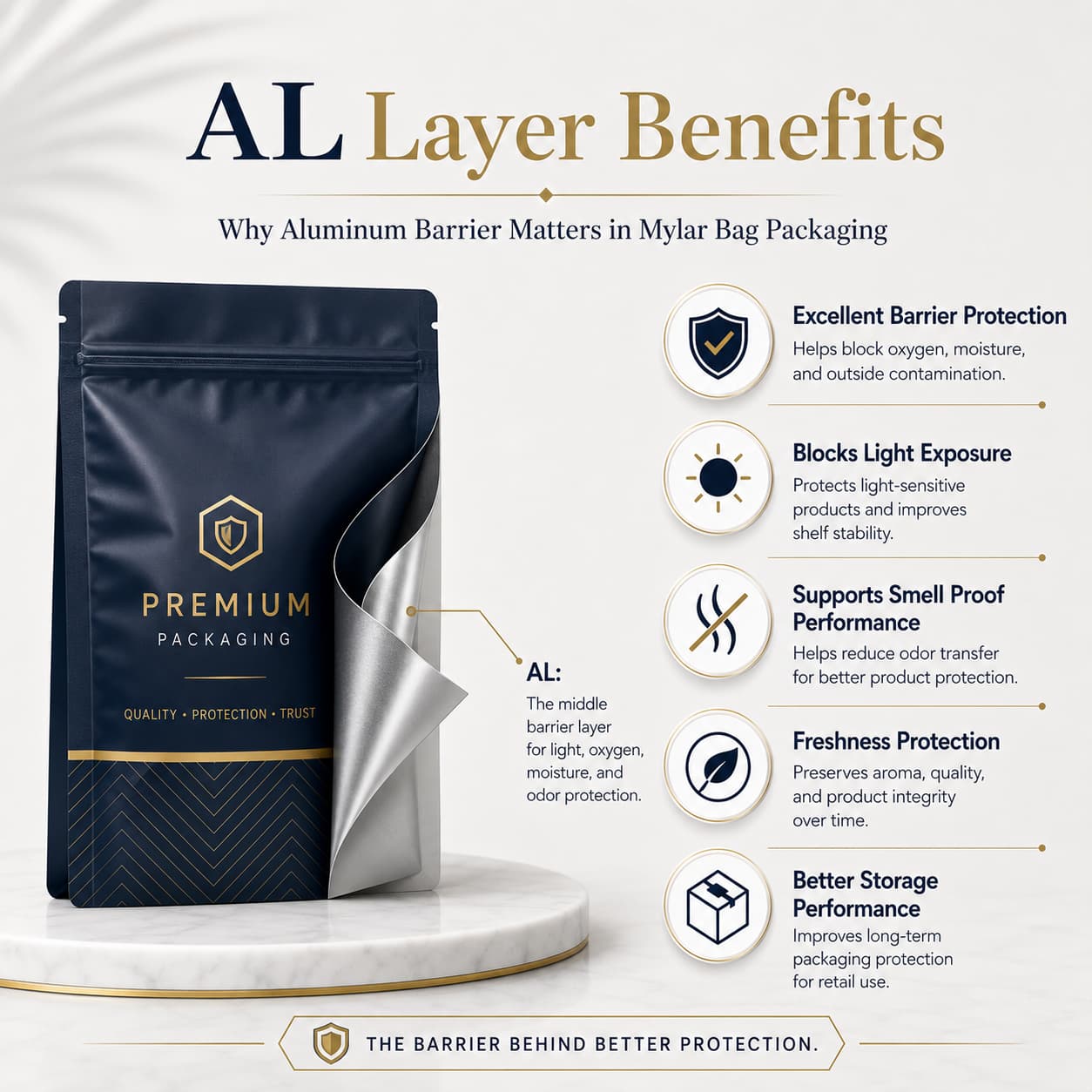
AL refers to aluminum foil or aluminum-based barrier material. This layer is usually placed in the middle of the mylar bag structure.
The AL layer is one of the most important reasons why many brands choose mylar bags. It helps block light, oxygen, moisture, and odor transfer, making the bag suitable for products that need stronger freshness protection.
Main functions of AL:
- Blocks light transmission
- Improves oxygen barrier
- Helps reduce moisture exposure
- Supports smell-proof performance
- Protects product freshness
- Improves long-term storage performance
For products that are sensitive to light, air, humidity, or aroma loss, the AL layer can significantly improve packaging protection.
This is why many smell proof mylar bags and high-barrier flexible packaging designs use aluminum-based laminated structures.
PE Layer: Heat Sealing and Inner Contact Layer
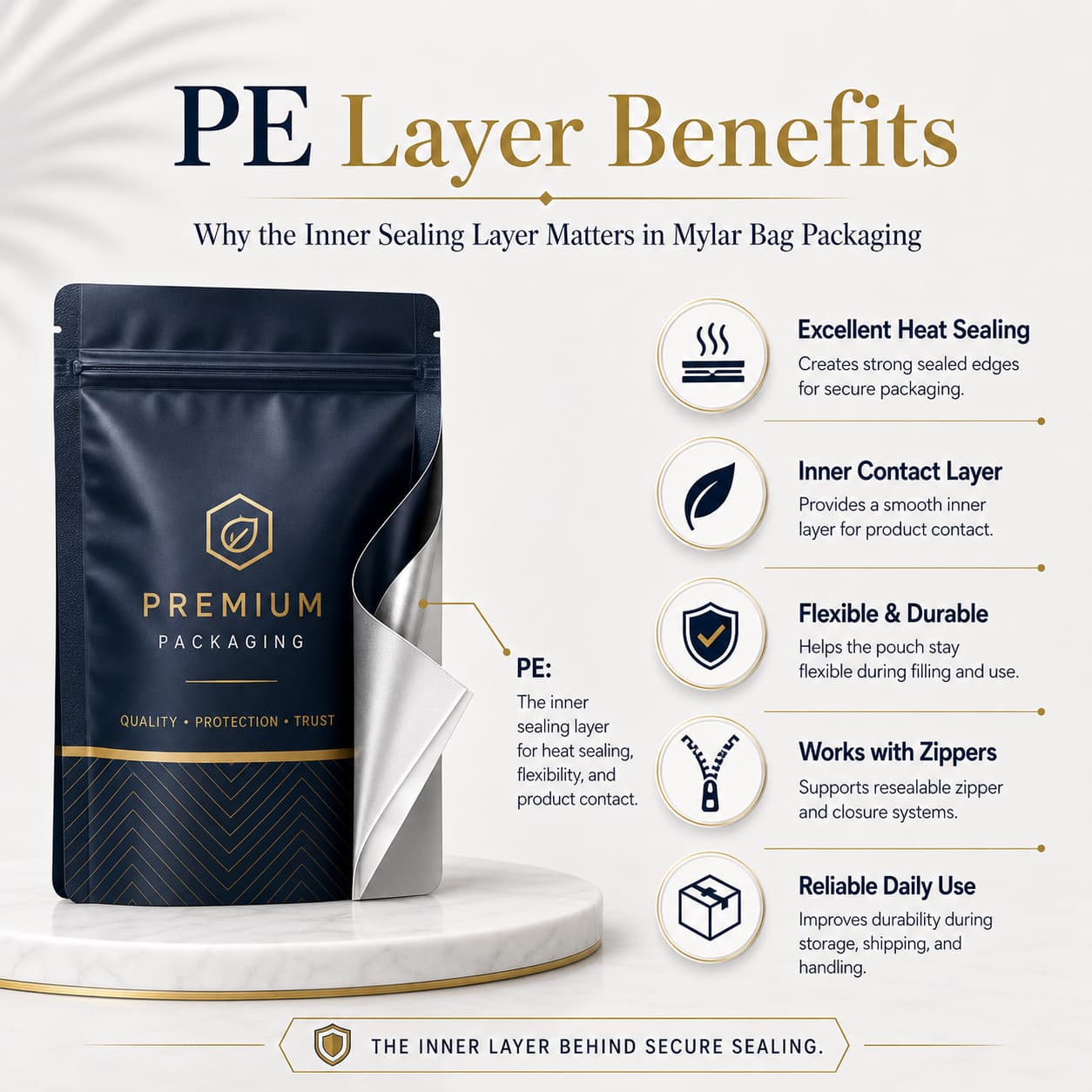
PE, or polyethylene, is commonly used as the inner layer of mylar bags.
The PE layer is responsible for sealing performance. During production, the bag edges are heat sealed, and the PE layer melts and bonds together to create a secure seal.
Main functions of PE:
- Provides heat sealing performance
- Forms the inner product contact layer
- Supports flexibility
- Helps create strong sealed edges
- Works with zipper closure systems
- Improves bag durability during use
A good PE layer helps the bag stay sealed during storage, shipping, and repeated handling. It is also important for resealable zipper bags, stand-up pouches, flat pouches, and child-resistant mylar bags.
If the PE layer is not suitable for the bag structure, the packaging may have weak sealing, poor flexibility, or unstable edge strength.
How to Choose the Right Mylar Bag Material
Choosing the right mylar bag material depends on several factors.
Before selecting a structure, brands should consider:
1. Product Protection Needs
If your product needs strong odor control, moisture resistance, or freshness protection, a high-barrier structure such as PET / AL / PE may be more suitable.
2. Packaging Appearance
If your brand wants a premium matte look, glossy finish, holographic effect, or kraft paper texture, the outer layer should be selected based on the desired visual style.
3. Bag Type
Different bag types may require different film thickness and structure.
Common bag types include:
- Stand-up pouch
- Flat pouch
- Flat bottom pouch
- Die-cut pouch
- Child-resistant mylar bag
- Zipper pouch
4. Printing Method
Digital printing and gravure printing may both be used for custom mylar bags, but material selection can affect color output, surface finish, and production cost.
5. Sealing Requirement
If the bag needs a zipper, child-resistant zipper, heat seal, tear notch, or hang hole, the material must be compatible with the selected structure.
6. Order Quantity and Budget
Higher-barrier material structures may cost more than simpler film structures. Your supplier can recommend suitable options based on your quantity, budget, and packaging requirements.
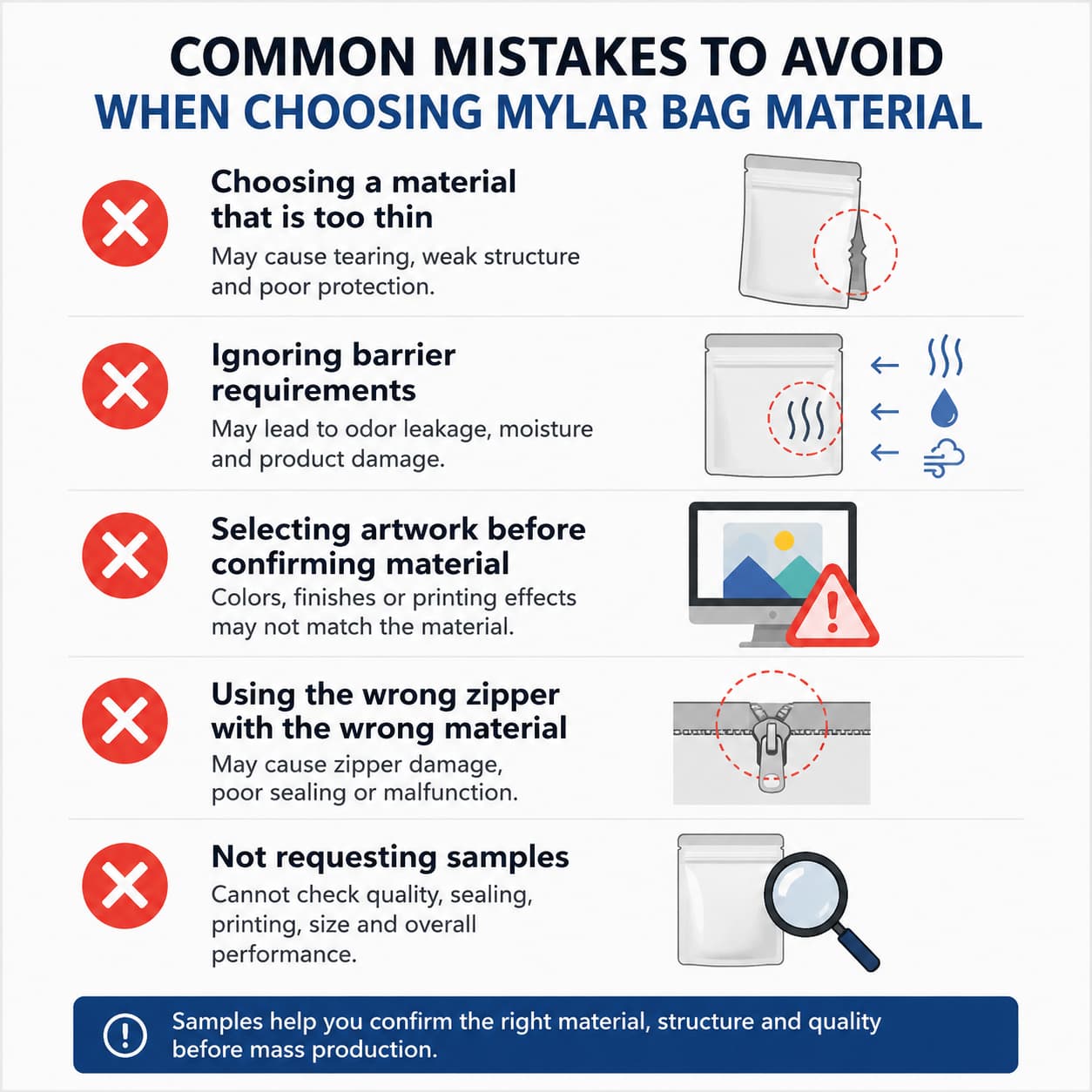
Common Mistakes to Avoid When Choosing Mylar Bag Material
Choosing mylar bag material only by price can lead to packaging problems later.
Here are common mistakes to avoid:
Choosing a material that is too thin
Thin material may reduce cost, but it can affect standing performance, sealing strength, and overall feel.
Ignoring barrier requirements
If your product needs protection from odor, moisture, light, or oxygen, a simple film structure may not be enough.
Selecting artwork before confirming material
Some finishes and printing effects require specific material structures. Confirm the material before final artwork approval.
Using the wrong zipper with the wrong material
The zipper must be compatible with the film thickness and structure, especially for child-resistant mylar bags.
Not requesting samples
Samples help check bag stiffness, sealing, printing color, zipper function, and overall appearance before mass production.
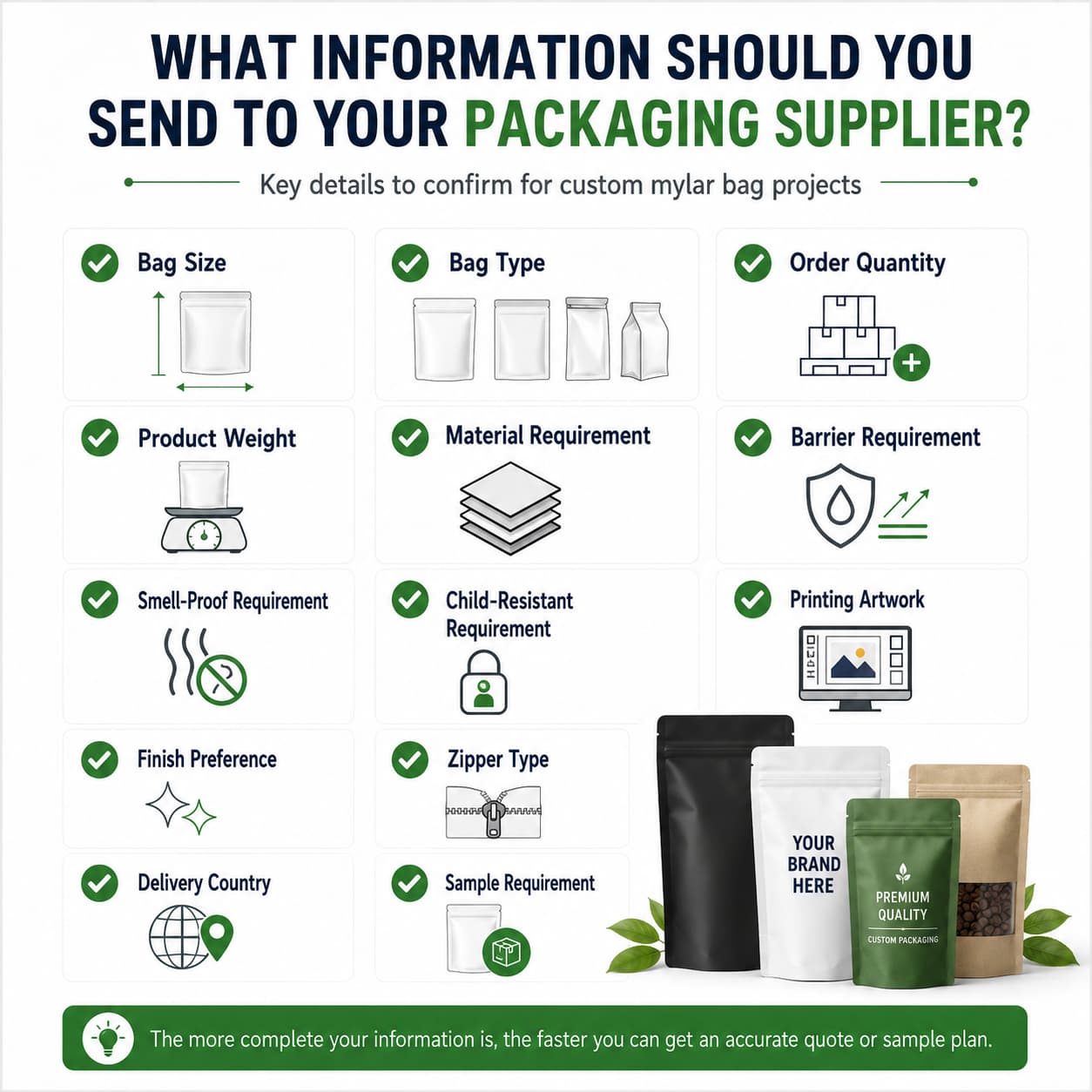
What Information Should You Send to Your Packaging Supplier?
To get the right material recommendation, prepare the following information:
- Bag size
- Bag type
- Order quantity
- Product weight
- Barrier requirement
- Smell-proof requirement
- Child-resistant requirement
- Printing artwork
- Finish preference
- Zipper type
- Window or hang hole requirement
- Delivery country
- Sample requirement
If you are not sure which material to choose, your supplier can recommend options based on your product, budget, and market requirements.
FAQ
What does PET / AL / PE mean in mylar bags?
PET / AL / PE refers to a common multi-layer mylar bag structure. PET is the printable outer layer, AL provides barrier protection, and PE is the inner heat-sealing layer.
Are PET / AL / PE mylar bags smell proof?
PET / AL / PE structures can provide strong barrier performance and are commonly used for smell proof mylar bags. However, zipper quality and heat sealing also affect smell-proof performance.
What is the best material for custom printed mylar bags?
The best material depends on the printing method, finish, bag style, and product protection requirements. Matte PET, glossy PET, holographic film, and kraft laminated structures are common options.
What is the best material for child-resistant mylar bags?
Child-resistant mylar bags need durable laminated film that works well with CR zipper systems. The material should provide strength, sealing performance, and reliable resealability.
Can mylar bag material be customized?
Yes. Mylar bag material can be customized by film structure, thickness, finish, color, barrier level, zipper type, and printing method.
Should I request samples before mass production?
Yes. Samples help confirm material feel, bag stiffness, printing color, zipper function, sealing strength, and overall packaging quality before bulk production.
Looking for Custom Mylar Bag Packaging?
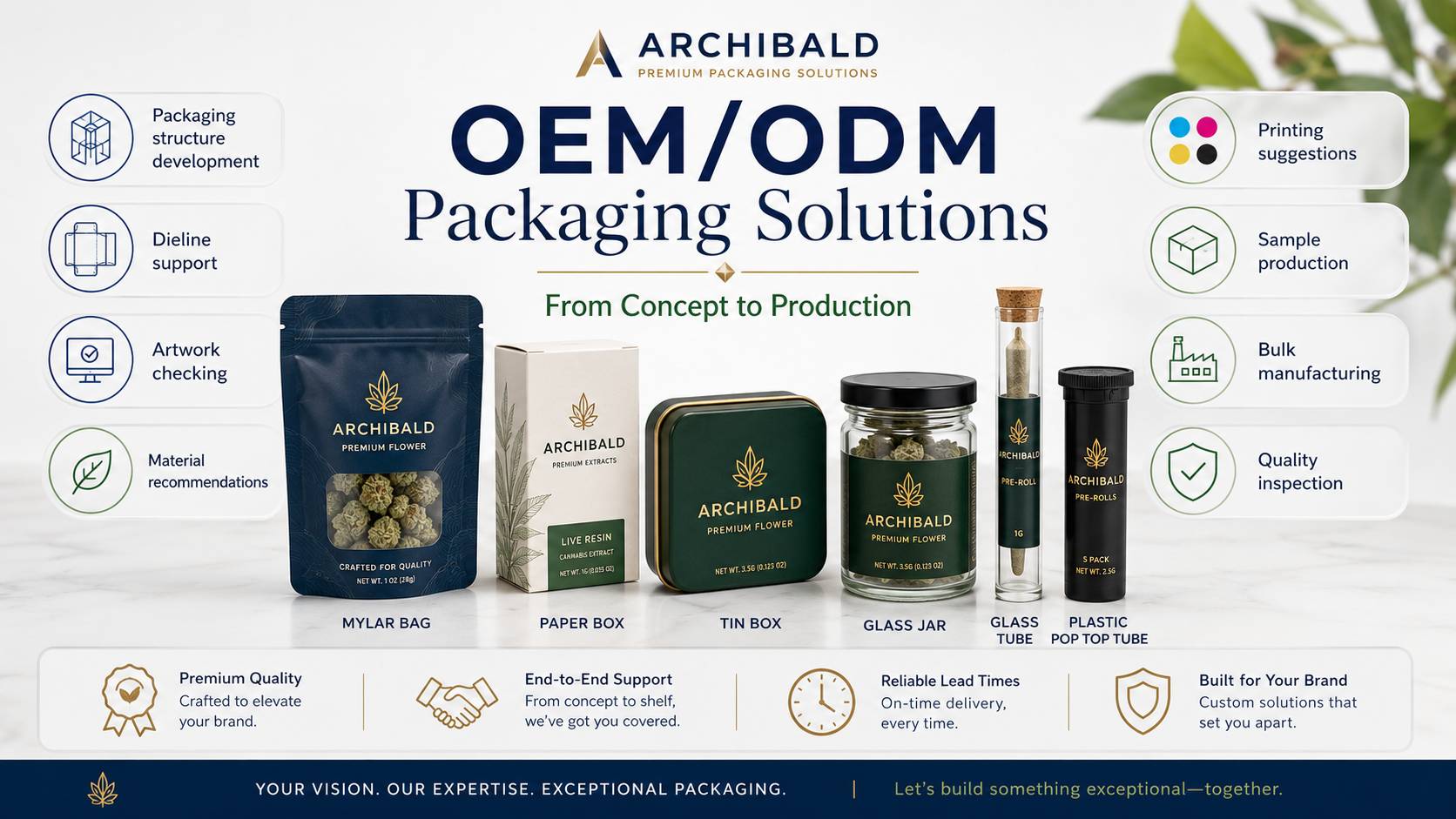
Archibald provides custom mylar bag packaging solutions with different material structures, including smell-proof, child-resistant, custom printed, and high-barrier options.
We support OEM/ODM customization for bag size, film structure, thickness, zipper type, printing method, matte or glossy finish, spot UV, holographic effect, and custom logo design.
Send us your bag size, quantity, artwork, material requirement, and delivery country to get a fast quote or sample plan.
How to Find a Reliable Custom Packaging Manufacturer for Your Brand
Digital Printing vs Gravure Printing for Custom Packaging: Which Is Better?