Digital Printing vs Gravure Printing for Custom Packaging: Which Is Better?
Choosing the right printing method is one of the most important decisions in a custom packaging project. For many brands, the two most common options are digital printing and gravure printing.
Both methods can produce attractive packaging, but they are suitable for different order quantities, budgets, timelines, and design requirements. Digital printing is usually more flexible for small batches and fast sampling, while gravure printing is often better for large-volume production with stable artwork.
This guide explains the differences between digital printing and gravure printing, and helps you decide which option is better for your custom packaging project.

What Is Digital Printing?
Digital printing is a printing method that transfers artwork directly from a digital file onto the packaging material. It does not require traditional printing plates or cylinders, which makes it faster and more flexible for short-run production.
For custom packaging, digital printing is commonly used for:
- Small batch orders
- Sample production
- New brand testing
- Multiple design versions
- Fast turnaround projects
- Low MOQ custom packaging
Because there is no plate-making process, digital printing is usually easier for brands that want to test packaging designs before placing large orders.
It is especially useful when a brand wants to launch quickly, adjust artwork frequently, or produce several designs at the same time.
What Is Gravure Printing?
Gravure printing is a traditional high-volume printing method that uses engraved cylinders to transfer ink onto packaging material. Each color usually requires a separate printing cylinder.
For custom packaging, gravure printing is commonly used for:
- Large-volume orders
- Repeat production
- Stable artwork designs
- High color consistency
- Premium flexible packaging
- Large-scale retail packaging projects
Gravure printing usually requires higher setup costs because printing cylinders need to be made before production. However, once the cylinders are ready, the printing speed is fast and the unit cost can become lower for large quantities.
This makes gravure printing a strong choice for brands with confirmed designs and stable long-term demand.
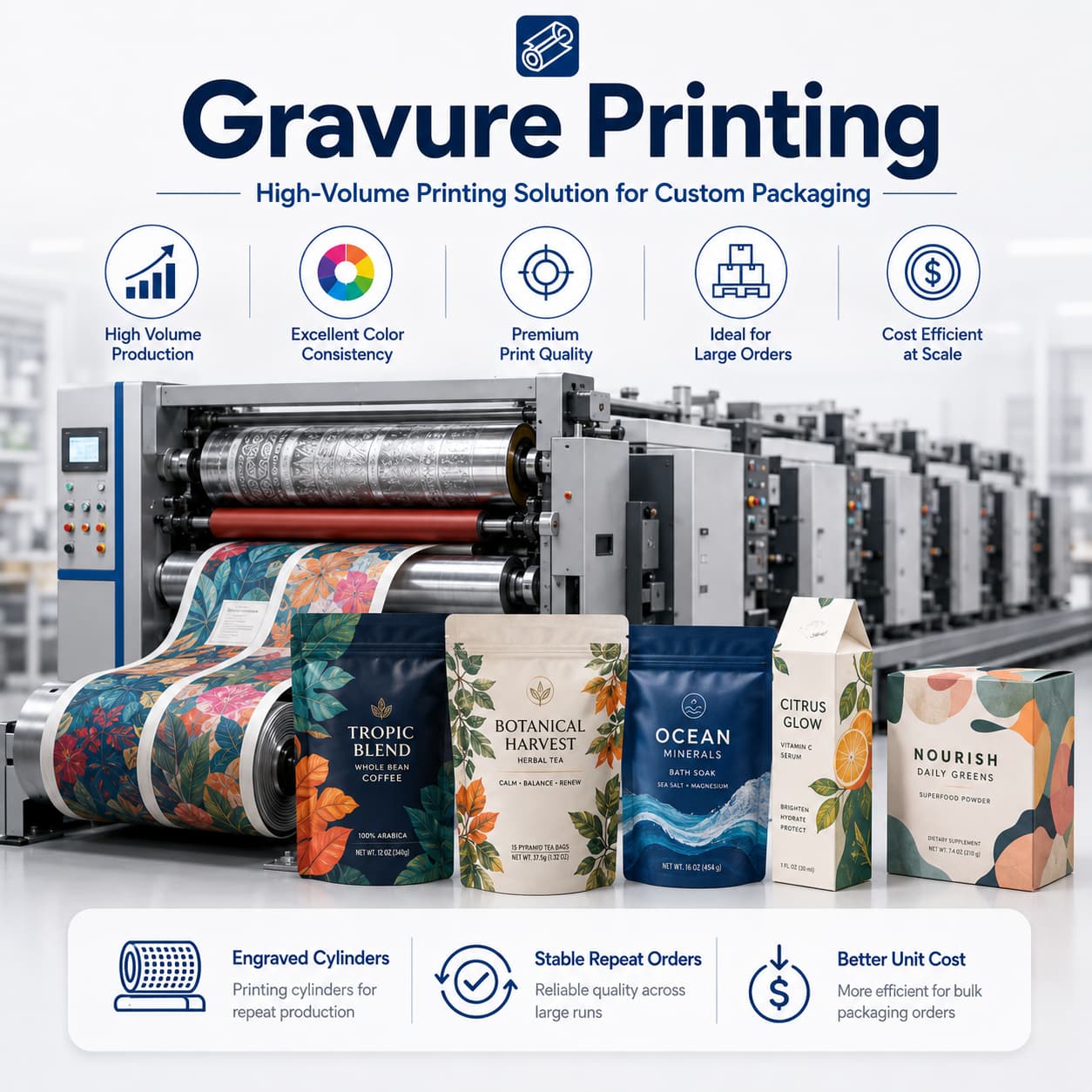
Digital Printing vs Gravure Printing: Key Differences
The main difference between digital printing and gravure printing is how the artwork is transferred and how suitable each method is for different production volumes.
| Factor | Digital Printing | Gravure Printing |
|---|---|---|
| Setup Process | Direct file printing | Requires printing cylinders |
| MOQ | Lower | Higher |
| Setup Cost | Lower | Higher |
| Lead Time | Faster for samples and small batches | Longer setup time, faster for mass production |
| Color Consistency | Good | Excellent |
| Unit Cost | Better for small runs | Better for large runs |
| Design Flexibility | Very flexible | Less flexible after cylinders are made |
| Best For | Small brands, test orders, short runs | Large orders, repeat production, stable designs |
Both methods can produce professional packaging, but the best choice depends on your order quantity, budget, and production goal.
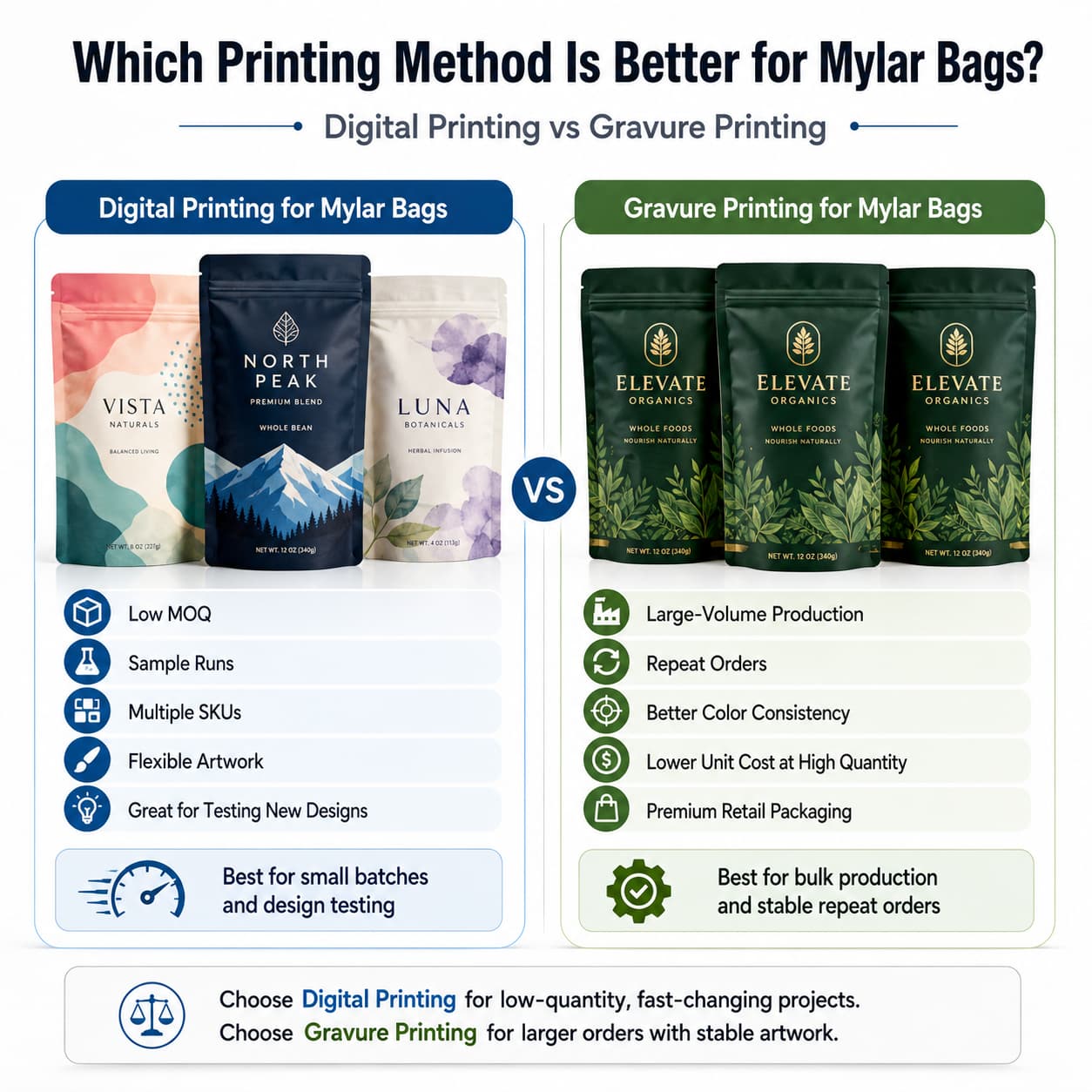
Which Printing Method Is Better for Mylar Bags?
For custom mylar bags, both digital printing and gravure printing can be used.
Digital Printing for Mylar Bags
Digital printing is suitable for:
- Low MOQ mylar bags
- Sample runs
- Short-term promotional designs
- Multiple SKUs
- Small brand launches
- Custom printed bags with flexible artwork
This method is useful when you want to test different bag designs before committing to mass production.
Gravure Printing for Mylar Bags
Gravure printing is suitable for:
- Large-volume mylar bag production
- Stable design orders
- Repeat production
- Better color consistency
- Lower unit cost at high quantity
- Premium retail-ready packaging
If your brand has confirmed artwork and expects repeated orders, gravure printing may be the better choice.
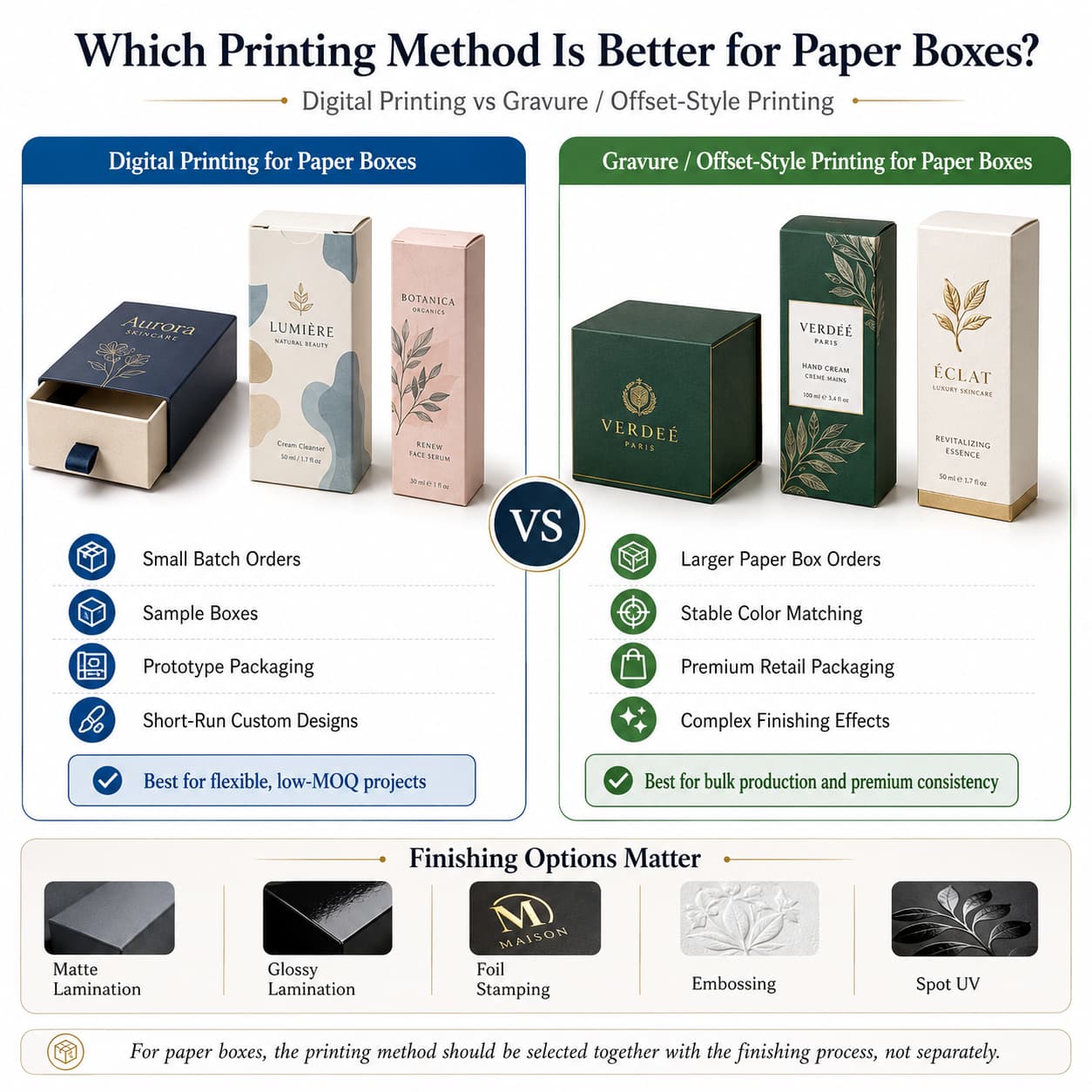
Which Printing Method Is Better for Paper Boxes?
For paper packaging boxes, the printing choice depends on the box material, finish, and order quantity.
Digital printing can be useful for:
- Small batch paper boxes
- Sample boxes
- Prototype packaging
- Short-run custom designs
Gravure or offset-style printing is often better for:
- Larger paper box orders
- Stable color matching
- Premium retail packaging
- Complex finishing effects
For paper boxes, finishing processes such as matte lamination, glossy lamination, foil stamping, embossing, and spot UV can also affect the final appearance.
The printing method should be selected together with the finishing process, not separately.
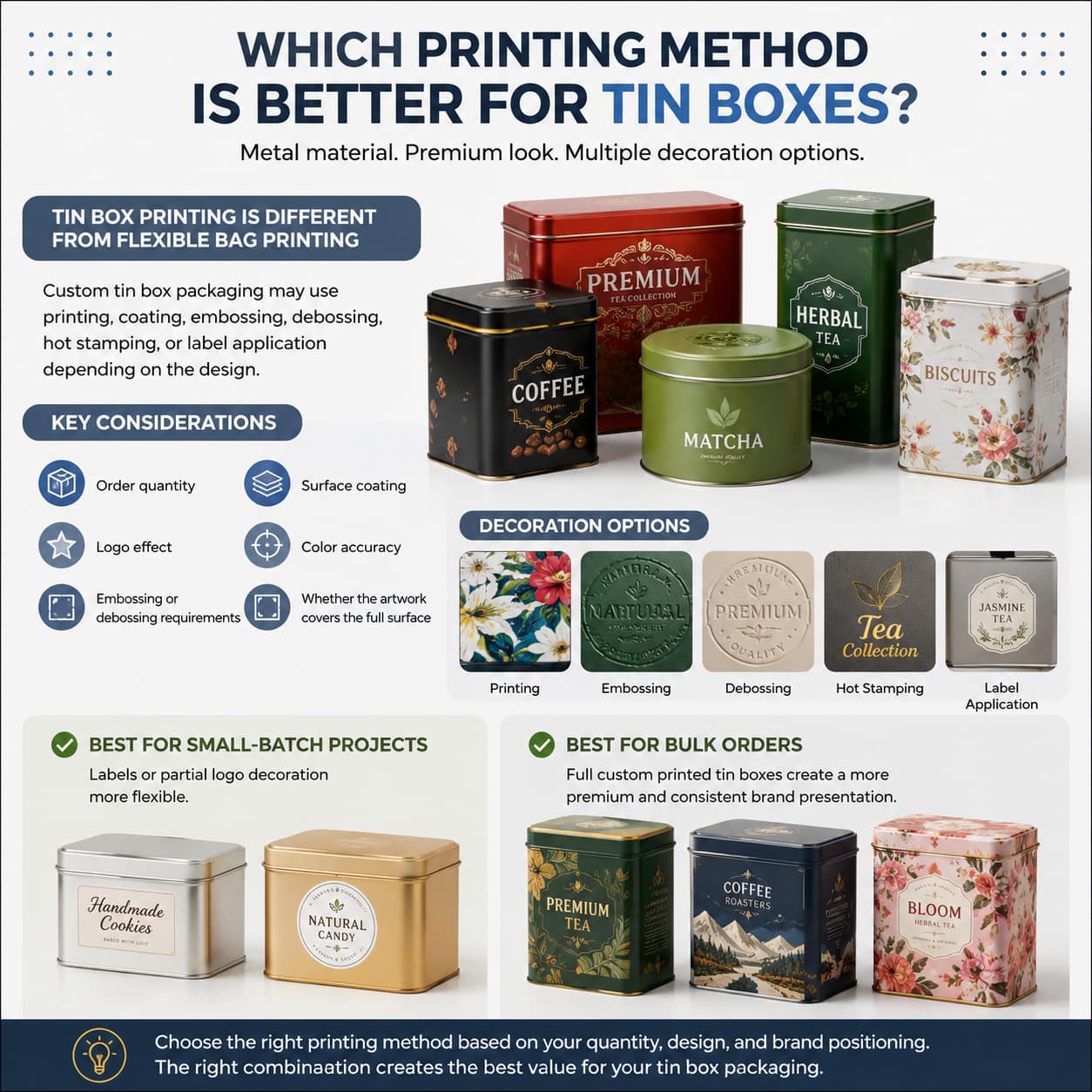
Which Printing Method Is Better for Tin Boxes?
Tin box printing is different from flexible bag printing because the material is metal.
Custom tin box packaging may use printing, coating, embossing, debossing, hot stamping, or label application depending on the design.
For tin boxes, the key considerations are:
- Order quantity
- Surface coating
- Logo effect
- Color accuracy
- Embossing or debossing requirements
- Whether the artwork covers the full surface
For simple small-batch projects, labels or partial logo decoration may be more flexible. For bulk orders, full custom printed tin boxes can create a more premium and consistent brand presentation.

Printing Finish Options to Consider
Besides the printing method, brands also need to choose the right surface finish. Finishing can strongly affect how premium the packaging looks.
Common finishing options include:
Matte Finish
Matte finish creates a soft, elegant, non-glossy surface. It is often used for premium packaging with a minimal or luxury look.
Glossy Finish
Glossy finish creates a shiny and reflective surface. It can make colors appear brighter and more eye-catching.
Spot UV
Spot UV adds selective glossy areas on specific parts of the packaging, such as the logo, pattern, or product name. It creates contrast between matte and glossy surfaces.
Holographic Finish
Holographic finish creates an iridescent effect that changes under different lighting angles. It is suitable for brands that want a bold and high-impact look.
Foil Stamping
Foil stamping adds metallic effects such as gold, silver, or colored foil. It is often used for logos, borders, or premium decorative details.
Choosing the right finish can help your packaging stand out on retail shelves and improve brand perception.
FAQ
What is the main difference between digital printing and gravure printing?
Digital printing prints directly from digital files and is better for small batches or samples. Gravure printing uses engraved cylinders and is better for large-volume production with stable artwork.
Is digital printing good for custom packaging?
Yes. Digital printing is suitable for low MOQ orders, samples, small batch production, and designs that may change frequently.
Is gravure printing better than digital printing?
Gravure printing is better for large-volume orders because it offers strong color consistency and lower unit cost at scale. However, it usually requires higher setup cost and longer preparation time.
Which printing method is better for small brands?
Digital printing is usually better for small brands because it has lower setup cost, faster sampling, and more flexibility.
Which printing method is better for large orders?
Gravure printing is usually better for large orders because it is more efficient and cost-effective for high-volume production.
Can I use matte, glossy, spot UV, or holographic effects with custom packaging?
Yes. Many packaging types can use matte finish, glossy finish, spot UV, holographic effects, foil stamping, or other premium finishing options depending on the material and structure.
Should I request samples before mass production?
Yes. Samples are recommended to confirm color, material, finish, size, structure, and overall packaging quality before bulk production.
Looking for Custom Printed Packaging?
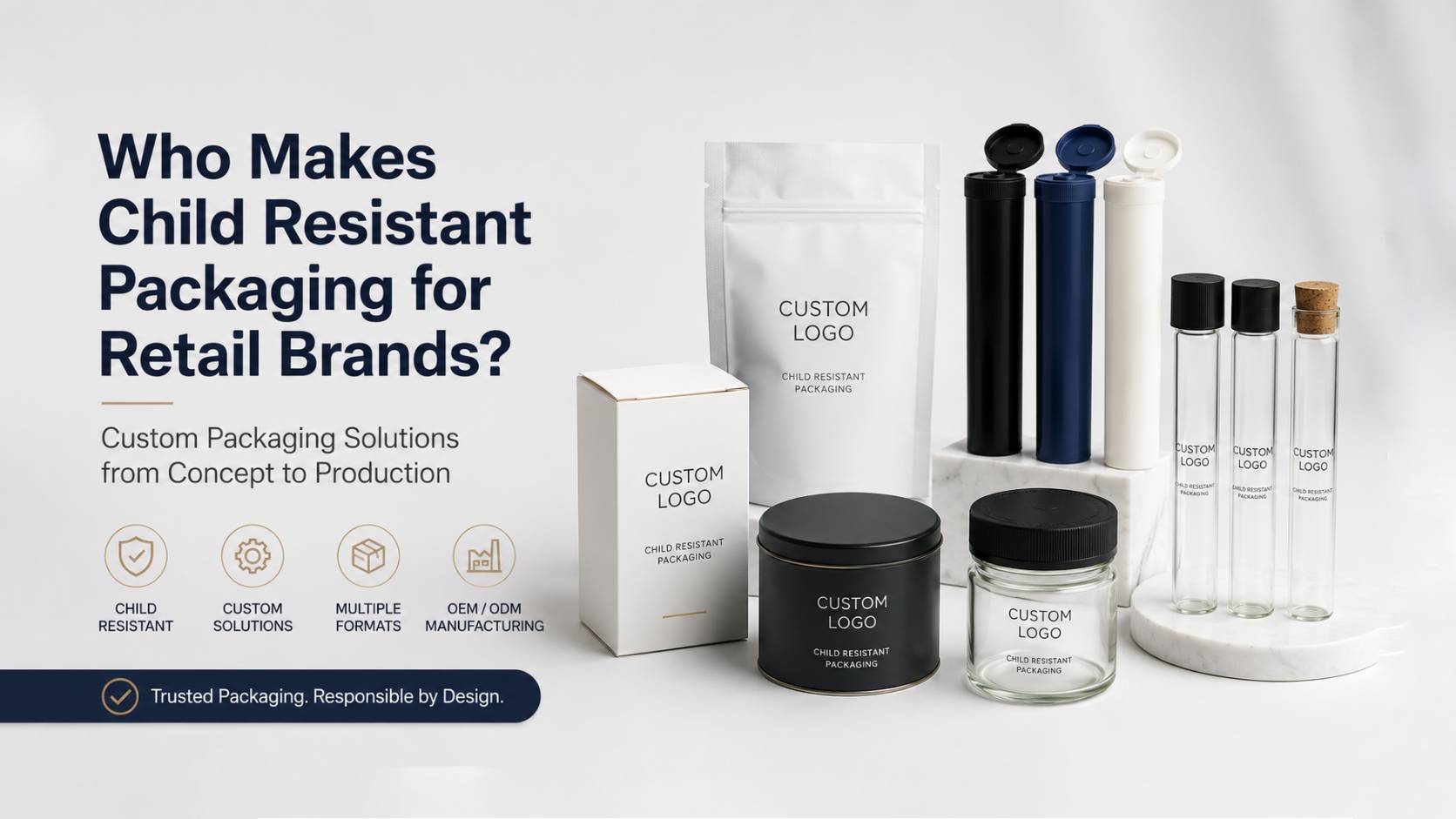
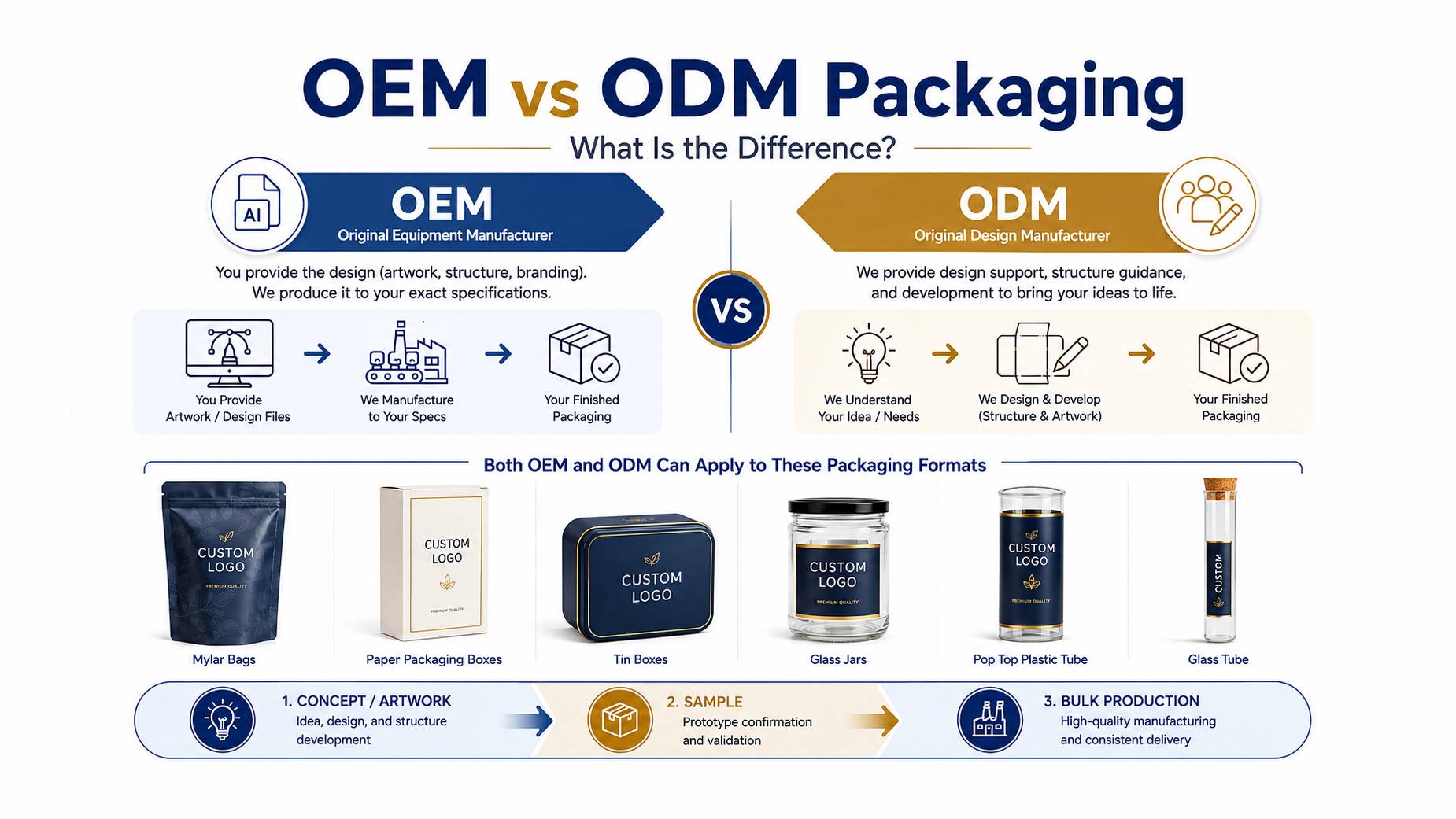
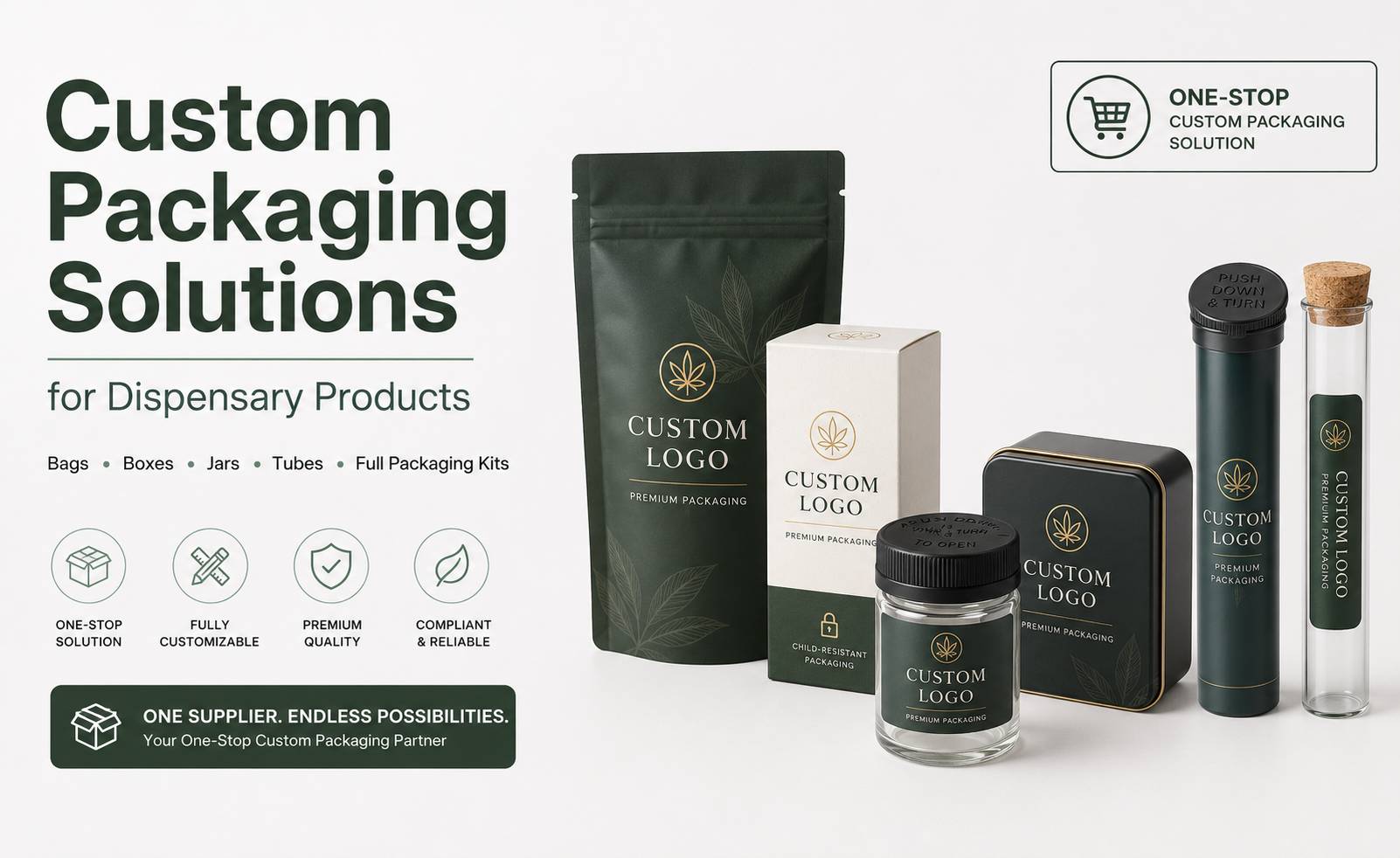
Archibald provides OEM/ODM custom packaging solutions for mylar bags, paper boxes, tin boxes, glass jars, plastic tubes, and other retail packaging formats.
We can help recommend suitable printing methods based on your quantity, artwork, packaging material, and budget.
Send us your packaging size, quantity, artwork, printing requirement, and delivery country to get a fast quote or sample plan.
Mylar Bag Material Explained: PET, AL, PE and High Barrier Film Structure
How to Choose a Child-Resistant Zipper for Mylar Bags